
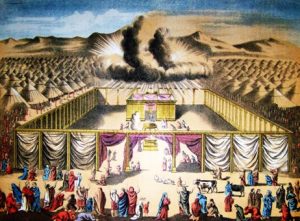
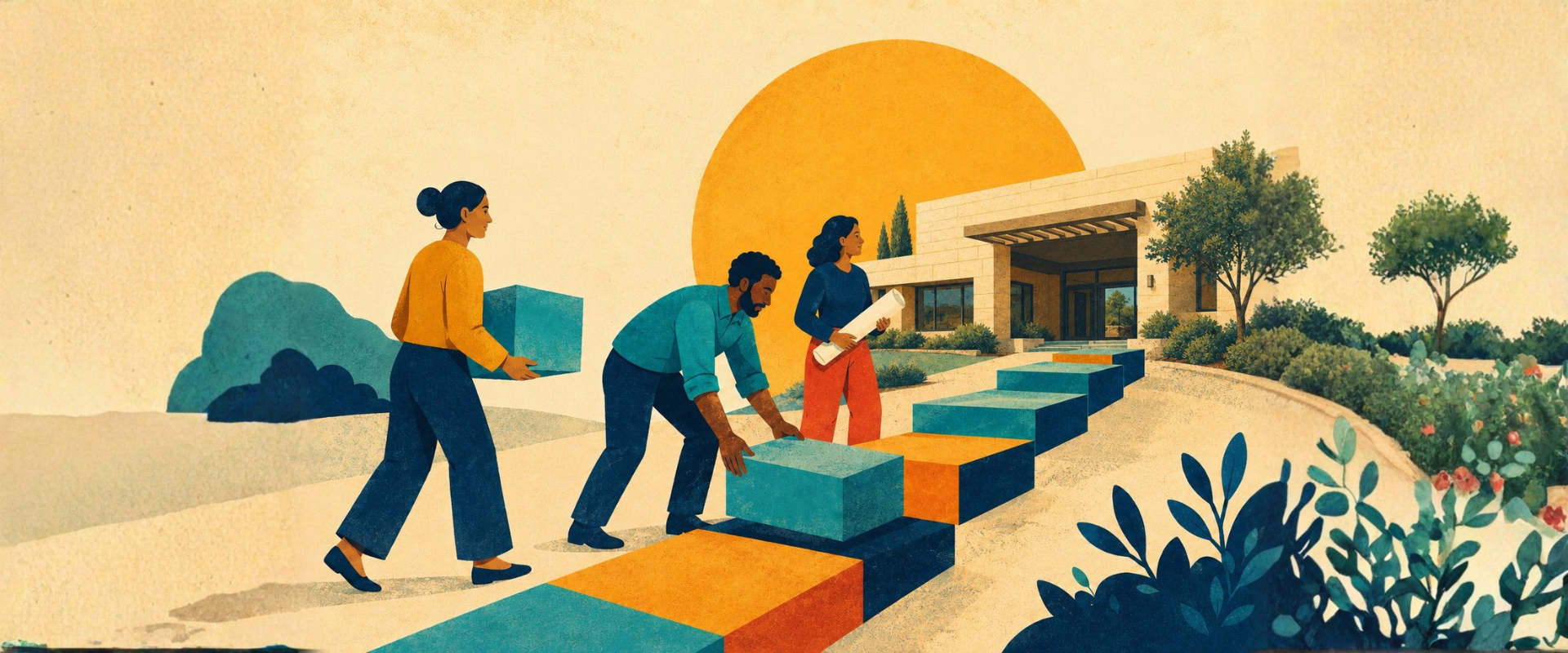
The Torah portion Terumah opens with the commandment: "And they shall take for Me an offering from every man whose heart moves him... and they shall make Me a sanctuary, and I will dwell among them." God asks the Israelites to build Him a home. According to Rashi and many commentators, this commandment came chronologically after the sin of the golden calf – after the tablets were broken, after trust was shattered. It is precisely then, in a state of brokenness, that the commandment to build something together comes. And the question that preoccupies me today is: How do you build something together when everyone wants a different "dwelling place"? When each camp sees "holiness" in a different place?
Two points from the episode
The passage offers two key points that may help us think about this question: The first point: "among them" – not "within it." God does not say, "I will dwell within it" – within the structure. He says, "I will dwell among them" – among the people. Holiness is not found in the physical structure, in the institution, in the Holy Ark itself. It is found in the connection between the people who build it together.
This is an important point: the temple may be perfect in its details—in gold and silver, in blue and purple—but if it does not live within the people, if the connection between them is broken, then the holiness disappears.
The second point: "From every man whose heart prompts him to give." The Tabernacle was built solely from voluntary donations. No taxes were imposed, no coercion, no obligation. "Whose heart prompts him" – those whose hearts move them to give.
And what is exciting is that everyone contributes. The rich give gold, the less wealthy give silver, and those who do not have much give copper or cloth. There is no hierarchy of contributions—everyone builds the shared tabernacle.
The Tabernacle and the Sabbath – Two Sides of the Same Coin
This year, we are studying "Shabbat of Freedom" at Beit Tefilah – an attempt to chart a new Israeli path for Shabbat. Not a Shabbat of legal coercion, nor a Shabbat that becomes just another day of shopping and consumption, but a Shabbat as a space of true freedom – freedom to pause, to return to ourselves, to be with family and community. There is a deep connection between the Tabernacle and Shabbat. If Shabbat is "sanctuary in time," then the Tabernacle is "sanctuary in place." Both require the same thing: free choice. The Tabernacle was built out of generosity – not because someone forced the people to do so, but because their hearts "spoke." And the Sabbath, as we try to rethink it, must be built from the same place: not because someone forces me to, but because I want to be a part of it. This is "freedom for something" and not just "freedom from something" – as we are learning these days: true freedom is not just freedom from chores, but the free choice to give meaning to our shared space.
And today – where are we??
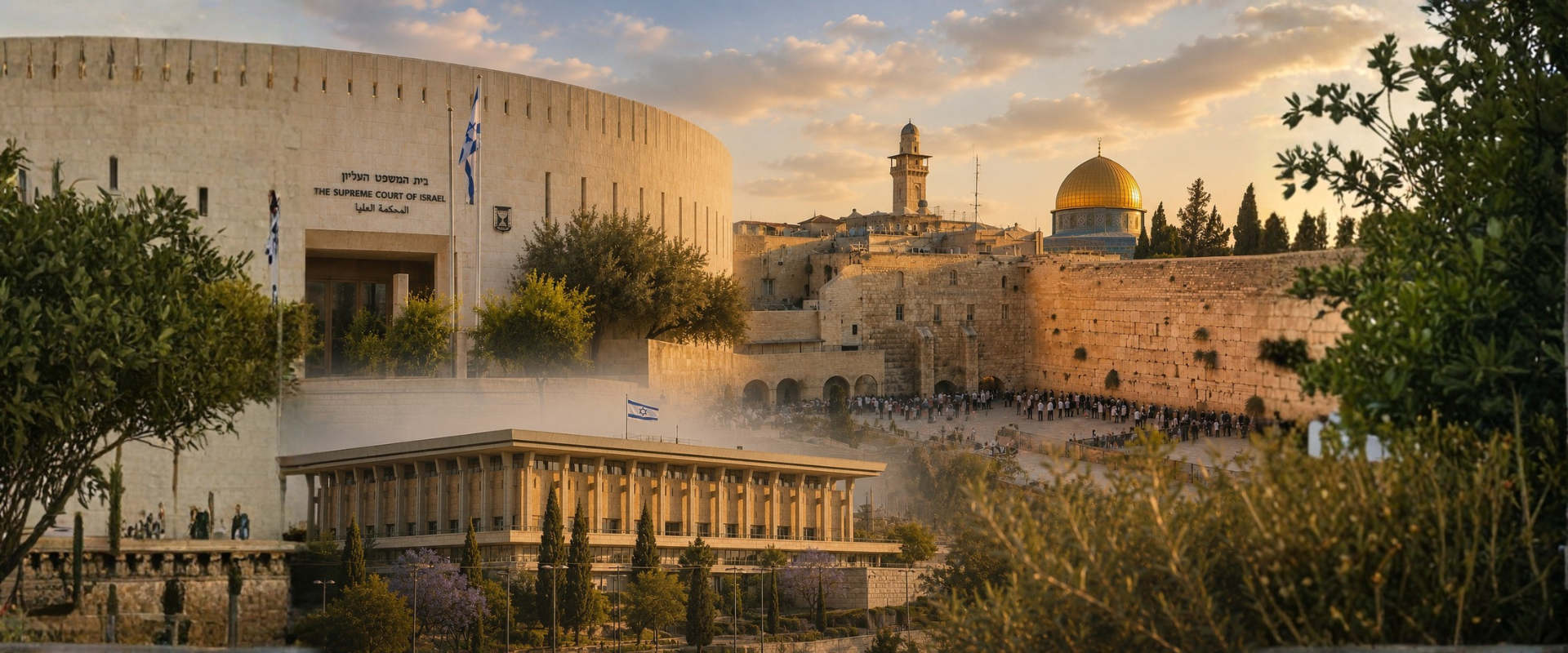
When I think about Israel today, I see a society that is struggling to find its holiness. Where is our "tabernacle"? Is it in the Knesset? In the Supreme Court? In the army? In the synagogue? Each camp points to a different place and says, "This is our holiness." And there are heated debates surrounding the most basic questions.
The Draft Law – Who Contributes to the Common Tabernacle? Do All Contribute, or Only Some of the People?
Separation of powers – what is "holy" and what is "most holy"? Who guards the boundaries between them?
The upcoming elections – each camp offers a different "Tabernacle," a different vision for the country, for society, for the future. And there is a crisis of confidence in institutions, in leadership, and sometimes even in each other.
So what do we do??
I don't know the answer. I'm not sure there is a simple answer. But the starting point is to remember two things.
First, holiness is "within" – in the connection between people, not in the institution itself. Perhaps instead of focusing only on institutions – which Knesset? Which court? Which army? – we should ask where we truly meet? Where do we feel that we have something in common?
Sometimes it's not in the Knesset or in court. Sometimes it's at the Shabbat table, on a family trip, in a small community, in a conversation with a friend who thinks differently from you but with whom you can still talk. Maybe that's where holiness resides. Second, the Tabernacle was built when the heart "speaks." Not by coercion. Not by saying, "You must serve," "You must observe Shabbat," "You must agree with me." But with a simple question: What do you want to contribute? What does your heart motivate you to give to our shared home? Because only when everyone contributes willingly—rich and poor, religious and secular, right and left—only then can we build something that is truly shared.
Last
There is something else beautiful about this parashah. Inside the Tabernacle, on the Ark, there are two cherubim. The Sages say that the cherubim face each other when Israel does God's will, and turn away when they do not.
There is a profound lesson here – even when there is a barrier (the curtain separating the Holy Place from the Holy of Holies), even when there are differences, it is possible and necessary to reach out to one another. Not to turn away.
I don't know how to build today's shared sanctuary. But the starting point is to remember that the temple was not built "within" – within a single perfect structure – but "among" – within the context of our relationships with one another. Perhaps today's sanctuary is not a specific law or a single institution, but rather new norms of behavior that we build together – listening, respect, the ability to hear the other even when we disagree with them. Our sanctuary can be the place where we take responsibility for one another, not out of coercion but out of choice.
And the question everyone should ask themselves is not "What should they give?", but "What do I want to contribute? What motivates me to give?"


Comments (01)
Well done, Willie.