I'll start with a personal confession,
The parashah 'Korach' is perhaps my least favorite parashah in the entire Torah.
This is a portion that denounces independent, critical thinking, and the right to criticize the leader, the chosen of God.,
And indeed, there are many leaders who claim to be God's chosen.
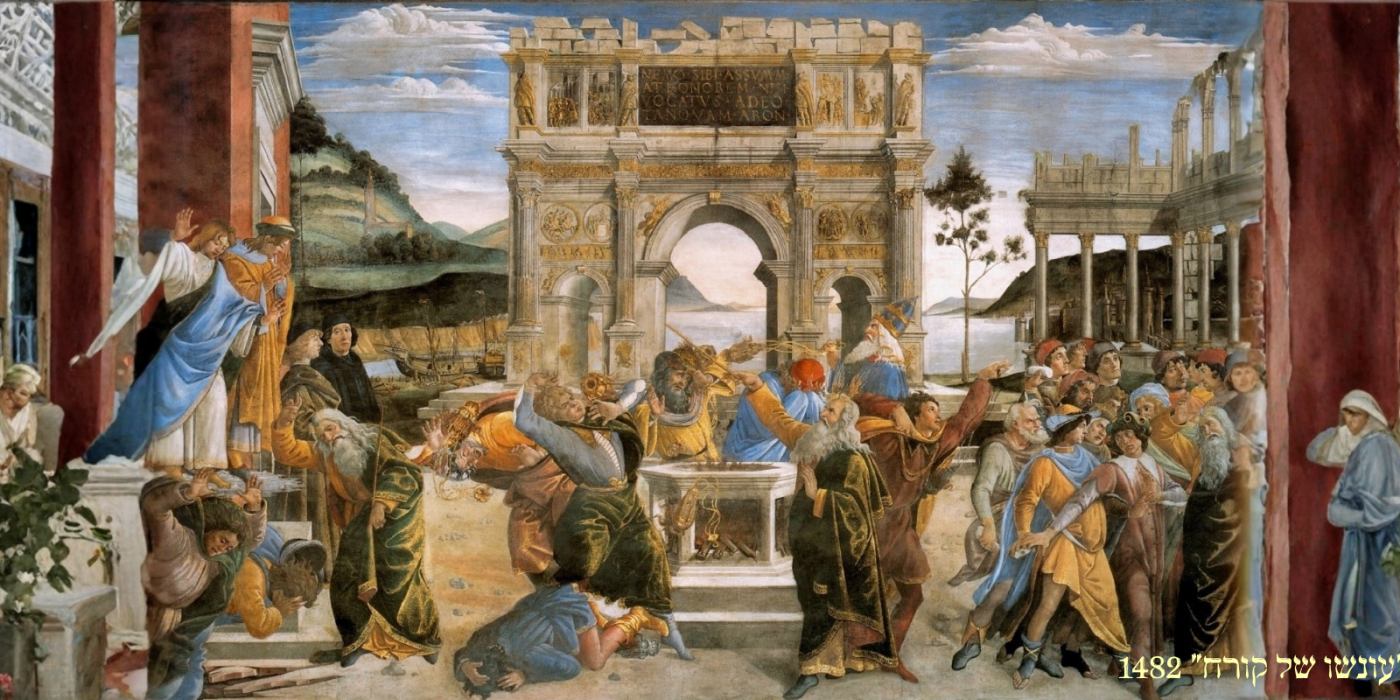
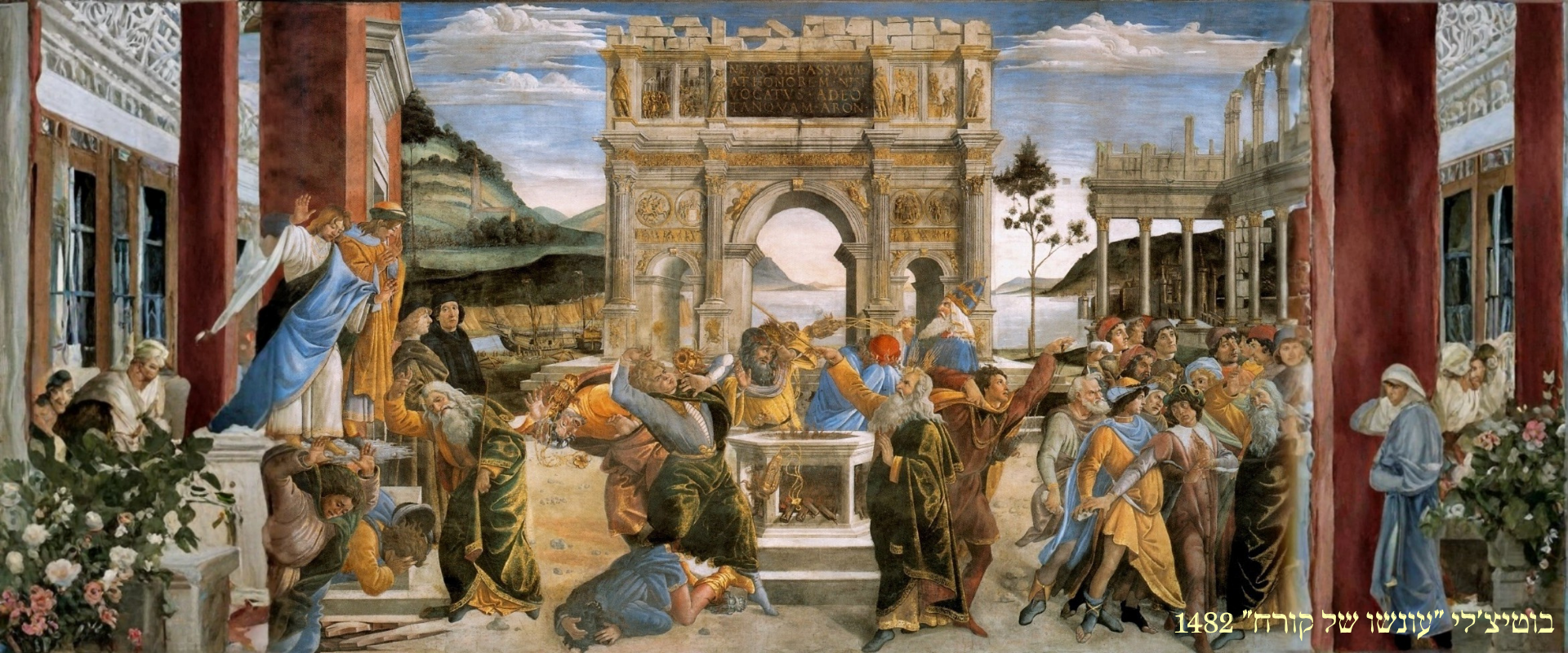
The parashah speaks out against the right of rebellion, "and they rose up before Moses" (Num. 16:2), the right of assembly: "and they gathered together against Moses" (Num. 16:3), and the right of protest.
And the text emphasizes that these are not marginal figures, but "two hundred and fifty heads of the Karaite community, men of renown" (16:2).
Moses" initial reaction: "And Moses heard, and fell on his face" (16:4).
Some commentators explain that he did so out of distress, while according to another opinion, he prostrated himself before God to ask Him to reveal to him what he should answer and what he should do. In my critical reading,
And in the spirit of current slang, Moshe's reaction was "the worst.".
However, later in the incident, when God informs Moses and Aaron of the punishment He intends to inflict upon the rebels, "they shall be separated from this community,",
"and will consume them right now" (Num. 16:22), Moses and Aaron gather themselves and this time their response is: "God of the spirits of all flesh, shall one man sin and You be wrathful with the entire community?" (Num. 16:22).
This response echoes Abraham's response in his argument with God, in his attempt to save Sodom from destruction. In Moses' case, his claim against divine judgment,
Here is evidence of a sense of responsibility for the entire community, a collective responsibility, unlike his initial reaction, which stemmed from personal insult and selfish motives.
And Moses, in order to emphasize before the people that he is not motivated by personal reasons, says, "Hereby you shall know that the Lord has sent me to do all these deeds,
For it is written (TLBZ 28), and it even adds, "And you shall know that these men have rejected the LORD" (TLBZ 30). The rebellion is presented as a rebellion against the LORD, and not just against the chosen of the LORD, Moses and Aaron.
And despite the terrible punishment of Korah and his company, and the divine intervention – the acceptance of Aaron's offering – the protest did not subside and even spread and intensified.
"All the congregation of the children of Israel murmured against Moses and Aaron, saying, 'You have killed the people of the Lord."" (Num. 17:6).
God is angry with the people and a plague breaks out, which Aaron manages to stop with the incense. But the lesson is that neither the incense gives life nor the incense causes death, but rather the will of God.
The incense, which was an expression of Aaron's election by God, now functions to save the people from the plague. God's choice of the High Priest, Aaron, is a responsibility and obligation to act for the people.
The work of the Levites in the Tabernacle is defined by Moses as the separation of the Levites from the congregation of Israel: "to bring you near to Him, to do the service of the Tabernacle of the Lord, and to stand before the congregation to minister to them" (16:9).
The word "to sacrifice," which Moses uses, has a double meaning. The Levites were brought close to the service of God, brought close to the sanctuary. But this closeness is also a sacrifice, for they are servants of the community in the sanctuary.
This is a task and mission for generations to come.
An entire chapter at the end of the Torah portion is dedicated to describing the rights and obligations of the Levites and priests, emphasizing the fact that the Levites have no inheritance like the other tribes.
They are dedicated to sacred service; their existence depends on the tithe the people are commanded to set aside for them, and they too must set aside a tithe for God – for the priests.
"They shall not share in the inheritance of the Israelites. (18:23)" God's choice of the Levites and priests is not an advantage, but a sacrifice, a calling, and a commitment.
And the desert section to my right, here and now.
If we read the Parsha of 'Korach' as a continuation of the Parsha of 'Shlach Lecha' – the Parsha of the Spies – it emerges that a period of turmoil and uncertainty breeds factionalism, jealousy, and envy.
And one can hope that as reality changes, the disputes will be settled...
And from the lesson of the portion, since holding office is not a privilege, but a dedication to holiness, rises the hope that those who serve in "holiness" and those close to power,
This proximity will also be seen as a sacrifice, of working for the good of the people and the country.