This week we will finish reading the book of Numbers – a book full of crises, complaints, rebellions, and punishments. The 40 years in the desert are nearing their end, but just before entering the land, a new kind of crisis erupts.
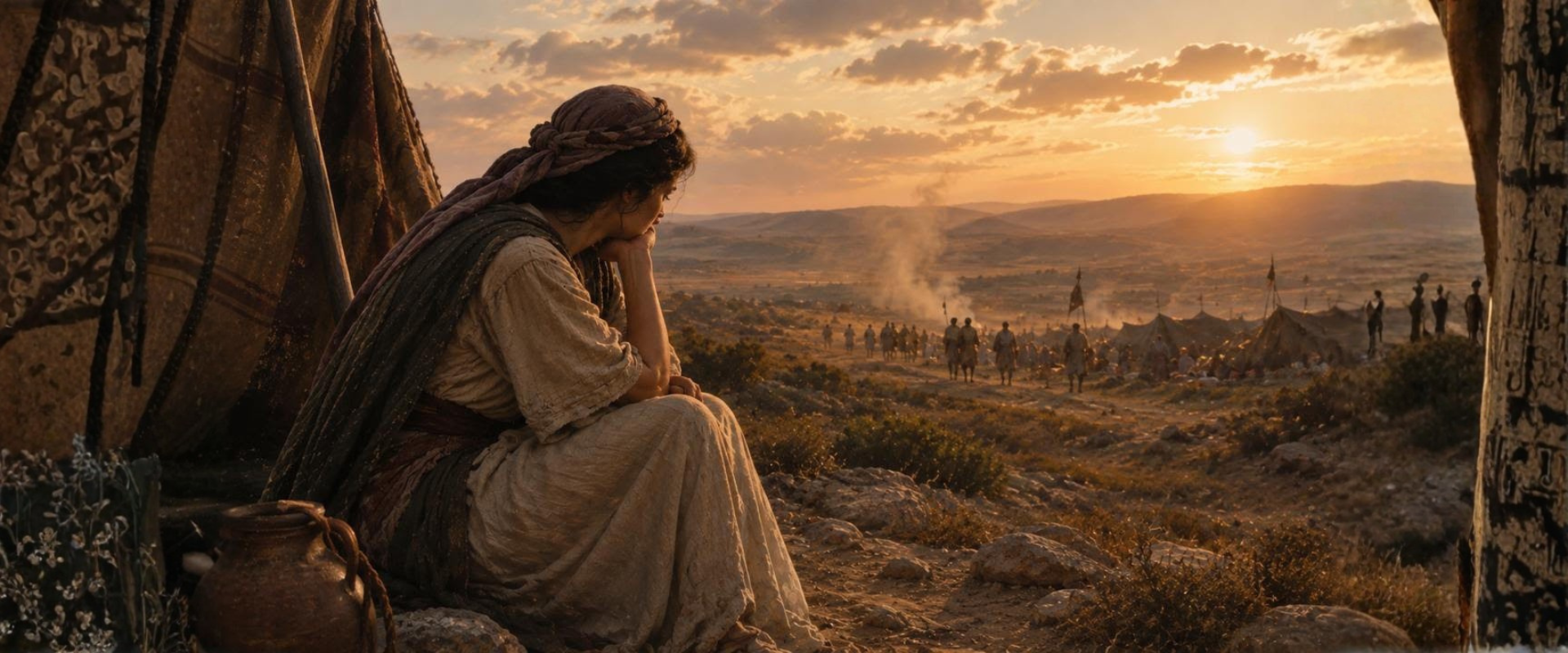
The tribes of Gad and Reuben, who own vast herds of livestock, wish to remain on the eastern side of the Jordan River, which is suitable for raising their herds.
Moshe is shocked. In his eyes, this is a concern for personal interest and a mortal blow to solidarity. His sharp call resonates powerfully even in today's Israeli society:
"Shall your brothers go to war, and you sit here?!" (Numbers 32:6)
The crisis was resolved only when they pledged to lead the way and fight until the conquest was complete. Moses relents, agreeing that the sons of Gad and Reuben will build cities for their families and pens for their flocks, and then go out ahead of the others to help in the conquest of the territories.
Did the tribes keep their promise? In the Book of Joshua, we discover that two and a half tribes (half of the tribe of Manasseh was added to them over time, and the tribe of the Reubenites also joined to help in the wars) – kept their word. They fought shoulder to shoulder for years, and only at the end of the wars did Joshua release them to their homes beyond the Jordan. All's well that ends well: almost... In the Book of Joshua, it tells that on their way back, they behaved strangely – and built an altar on the banks of the Jordan. "A large altar to behold". (Joshua 22:1)
This act—just like their original request to settle beyond the Jordan—was done unilaterally. And again, it arouses immense suspicion and displeasure among the rest of the people. When Joshua and the people hear about it, the reaction is immediate and sharp. Just as Moses did in his time, they interpret this step as rebellion, betrayal, and an attempt to divide the people religiously and politically (since sacrifices are only permitted at the altar in the Tabernacle at Shiloh). A delegation led by the zealous Phinehas is sent to them to investigate the matter.
But then comes the shocking explanation from Gad and Reuben. They didn't build an altar to sacrifice offerings on at all; they built it out of deep anxiety about the future:
"And if we did not do this out of concern for the matter, saying: Tomorrow your children will say to our children... you have no portion in the Lord. (Joshua 22:24)
This is a turning point in the plot and intention: Joshua and the people suspected that they [the tribes of Gad and Reuben] wanted to separate from them geographically and religiously, but in reality, the tribes of Gad and Reuben suffered from separation anxiety. They realized that now that their partnership in the military burden had ended, geographical distance could erode their emotional and spiritual belonging.
""And we said, 'Let us build an altar for ourselves—not for a burnt offering or for a sacrifice, but Witness It is between us and you and between our generations after us..." (Joshua 22:26-27)
In the Torah, we become acquainted with the concept "And it shall be, when your son asks you" (Exodus, 13:14) – We remember the past to explain the present. Gad and Reuben are doing the opposite: They are shaping the present to save the future..
Their massive altar was not a ritual object, but a monument—a visual bridge intended to remind future generations on both sides of the Jordan River: We are one people, we share common values, and we are part of the same story.
We are living in a time of difficult, deep, and bloody disputes in Israeli society. We find ourselves obsessively preoccupied with questions of the present: Who is right and who is wrong? Who contributes more and who bears the burden? Who is winning the battle for consciousness and who is losing? This dynamic drains all our energy and narrows our focus to the here and now.
But the giant altar of the two and a half tribes, built immediately after the conquest battles ended, invites us to pause and lift our eyes beyond the immediate horizon. It forces us to ask the most frightening question: What will remain of our connection the day after? After our arguments end? How will we be, and who will we be to each other?
The sons of Gad and the sons of Reuben taught us a dramatic lesson in long-term thinking. They were not preoccupied with what their contemporaries, who fought shoulder-to-shoulder with them, would think.
The sons of Gad and the sons of Reuben are not building an altar to resolve the current dispute. They are building it so that this dispute does not become the only story told to future generations. They are not building a physical bridge to the present – they are building a bridge to memory. Their great concern is that their grandchildren will not inherit distance and disconnection.
From their actions, we understand a profound truth: A sense of belonging is not something you inherit from your parents. It is something you pass on to your children. It requires work, it requires design, and it requires active action.
And this is true leadership.
Leadership is not measured solely by the ability to solve specific crises, and it is certainly not measured by the ability to win the present argument and subdue the opponent. True leadership is measured by a deep sense of responsibility for what this debate will leave as a legacy for the next generation. She understands that the most important question isn't how today's war ends – but what story it leaves for tomorrow.
There will always be disagreements among us; that is the nature of a nation. The big question we need to take home with us is: Along with these disagreements, will we also pass on this sense of disconnection to our children? Or will we know, even in the heat of the debate, how to build the altars, monuments, and testimonies that will remind them that we all, in the end, belong to the same story and depend on one another’s memories and lives?.
Shabbat Shalom.