How interesting that it fell to my lot to deal specifically with this Torah portion, which deals with blessings and curses.
My Hebrew name is Bracha, and until I studied this Torah portion, I didn't realize how connected it is to the idea of living in the Land of Israel!
We read in the Book of Deuteronomy, chapter 11:
Behold, I set before you this day a blessing and a curse: the blessing, if you obey the commandments of the LORD your God, which I command you this day; and the curse, if you will not obey the commandments of the LORD your God, but turn aside from the way which I command you this day, to go after other gods, which you have not known. (Deuteronomy 11:26-28)
Because blessing and curse are abstract ideas that are sometimes difficult for us to deal with, God asks to plant these ideas in a tangible way and says that when we arrive in the land there will be a ceremony of giving blessing and curse on two mountains:
"And it shall be, when the Lord your God brings you into the land which you go to possess, that you shall set the blessing on Mount Gerizim and the curse on Mount Ebal." (29)
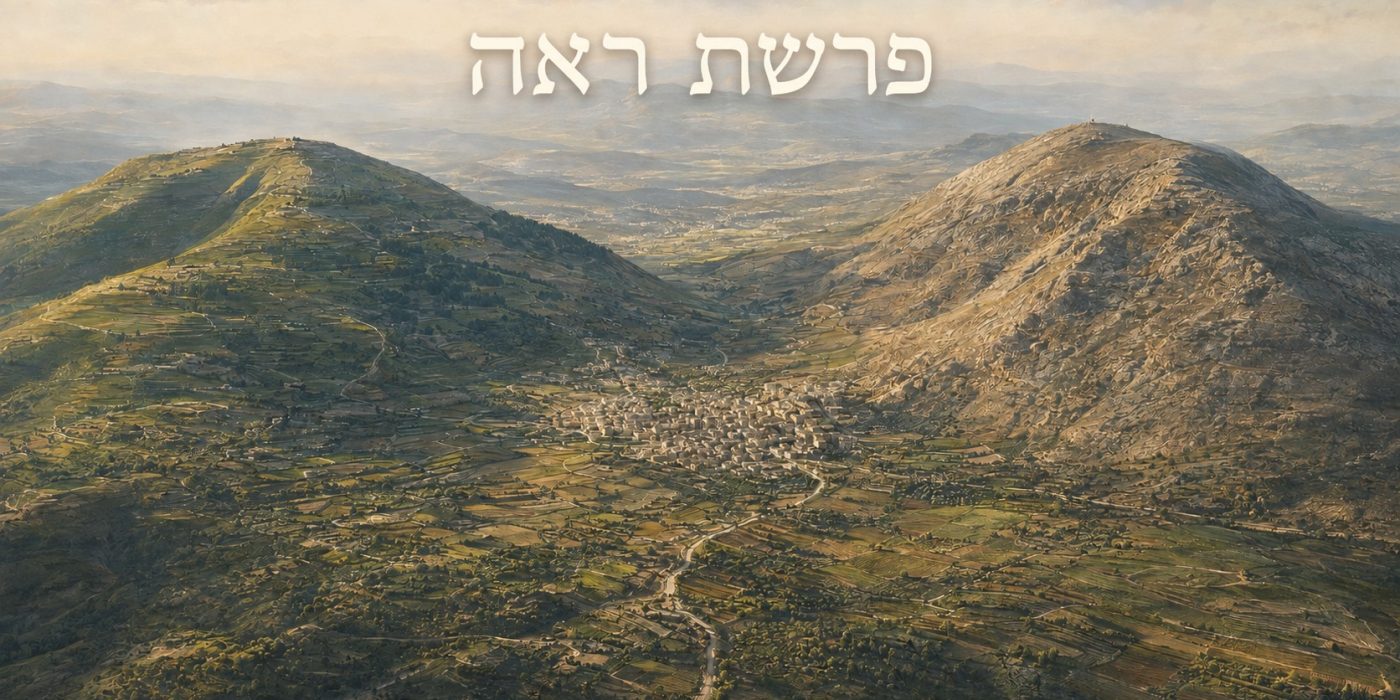
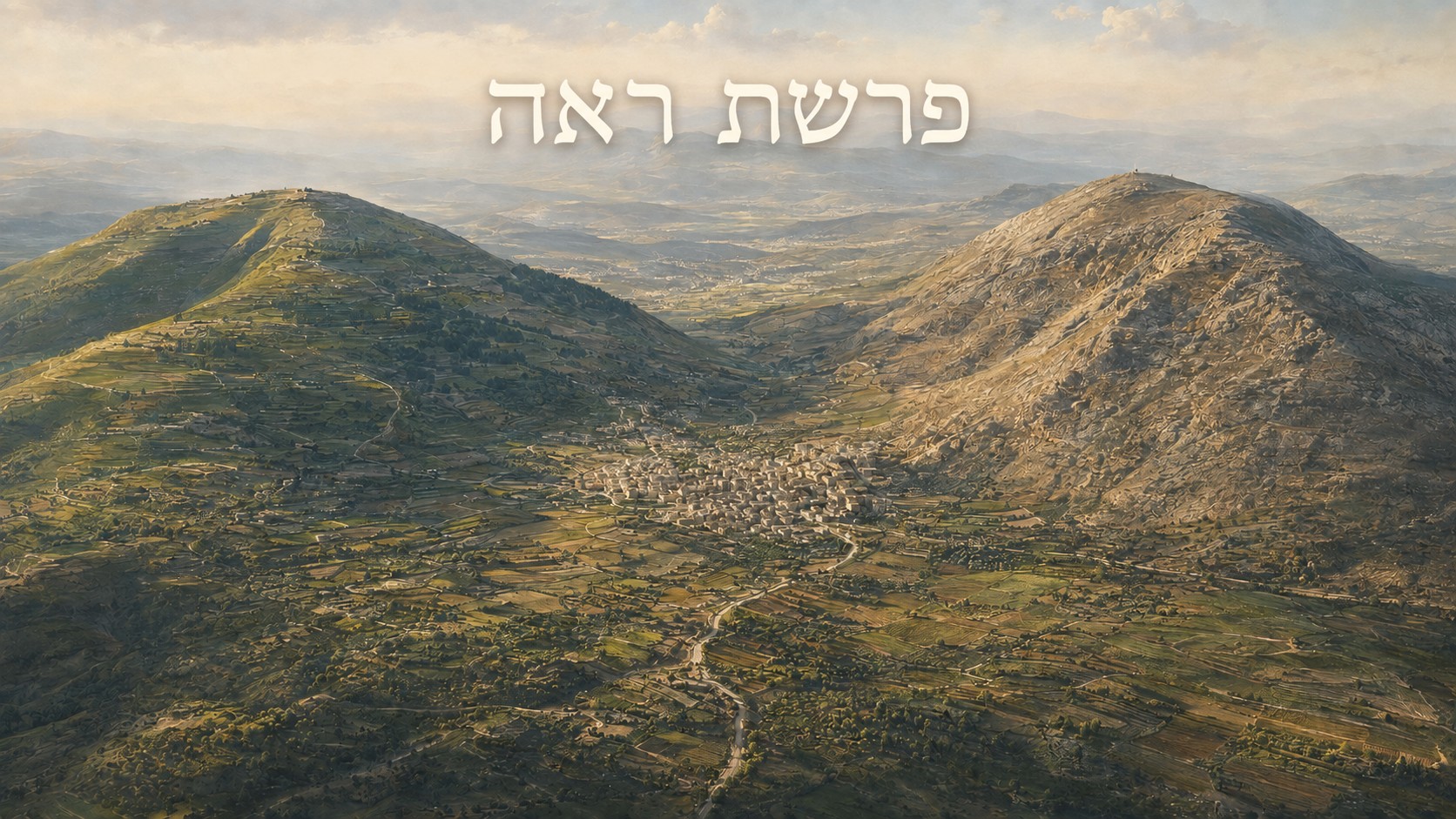
These two mountains stand opposite each other, they surround the city of Nablus, and when you look at them from above you see one mountain covered with trees—Mount Gerizim—and another mountain that is completely barren and without vegetation, which is of course Mount Ebal. Which once again vividly illustrates the blessing as a green and flourishing mountain and the curse as a barren mountain that produces nothing good...
Shechem is significant in Jewish history and is as ancient as Jerusalem and Hebron, but what is important in my opinion is that Joseph's Tomb is located in Shechem and that the two mountains stand opposite it. Joseph experienced both blessing and cursing in his life and reminds us to this day that every action we take can lead to a blessing or a curse – there is no third option... This awareness should help us behave in the way God expects of us.
The possibility of planting abstract ideas within a tangible reality is also realized when we "make aliyah.".
"For you are crossing the Jordan to go in to take possession of the land that the LORD your God is giving you, and you shall possess it and dwell in it. And you shall be careful to do all the statutes and the rules that I am setting before you today."
(31-32)
God wants us to settle in this land and obey His laws through the constant study of them. As a liberal Jew, I interpret this sentence as a call to "continually adapt the law to the reality surrounding us." We must not worship other gods, but rather concentrate on our laws and observe our commandments. Indeed, it is much easier to do this in Israel than in the Diaspora! Moreover, many laws are related to agricultural matters, and they can only be fulfilled in a land that belongs to us.
One of the central themes in Parashat Re'eh is the centralization of worship: meaning that sacrificial worship must be performed in the designated place, “the place the Lord will choose.” As part of this effort to centralize worship, there is also a commandment to uproot the places of worship of the idolaters, the inhabitants of the land:
"You shall surely destroy all the places where the nations whom you are dispossessing served their gods, on the high mountains and on the hills and under every green tree. You shall tear down their altars and smash their pillars and burn their Asherim with fire, and you shall cut down the carved images of their gods and obliterate their name from that place. (Deuteronomy 12:2-3)
This sounds quite cruel, but I believe God is asking us to uproot idolatry, which also includes the shocking sacrifice of human beings, as described later in the Torah portion, so that we can focus on His commandments and not be influenced by the other nations. We must fulfill our duties and respect all the laws He gave us… God wants us to live pure lives in the land He gave us, to enjoy the food we eat, to work all week, and to rejoice on the Sabbath.
Since I travel the world a lot, I can promise you that there is no place in the world where I can rest on the Sabbath as I rest here! I feel that the entire land is resting and trying to forget the hardships,
The pains and the worries. The feeling of being part of the majority is a wonderful feeling, which of course I could never experience in Switzerland, my native land. The very connection to people we do not know, simply because they live as we live and feel as we feel, gives the soul tremendous energy, peace of mind, and quiet that open a gate to the comfort of feeling that we are in the right place at the right time.
Living in the Land of Israel is a very costly thing, and we must preserve this ability. In the Torah portion, it says:
"When the LORD your God cuts off from before you the nations which you go in to dispossess, and you dispossess them and dwell in their land, take heed to yourself that you are not ensnared to follow them, after they are destroyed from before you, and that you do not inquire after their gods, saying, "How did these nations serve their gods? I will do likewise." (12:29-30)
The verses continue to warn us not to act as other nations do: we must guard ourselves against the cruelty of our enemies and not follow in their ways. And no less importantly—we must appreciate what we have: our Judaism, the land, and all that we have achieved through hard work, for we have no other land.
Shabbat Shalom!