Parshat Ki Tavo


Words for Shabbat - A community blog for this week's parashah

Parshat Ki Tavo

"Mikra Bikurim – The founding story of our personal and national identity

By: Ruti Shapira

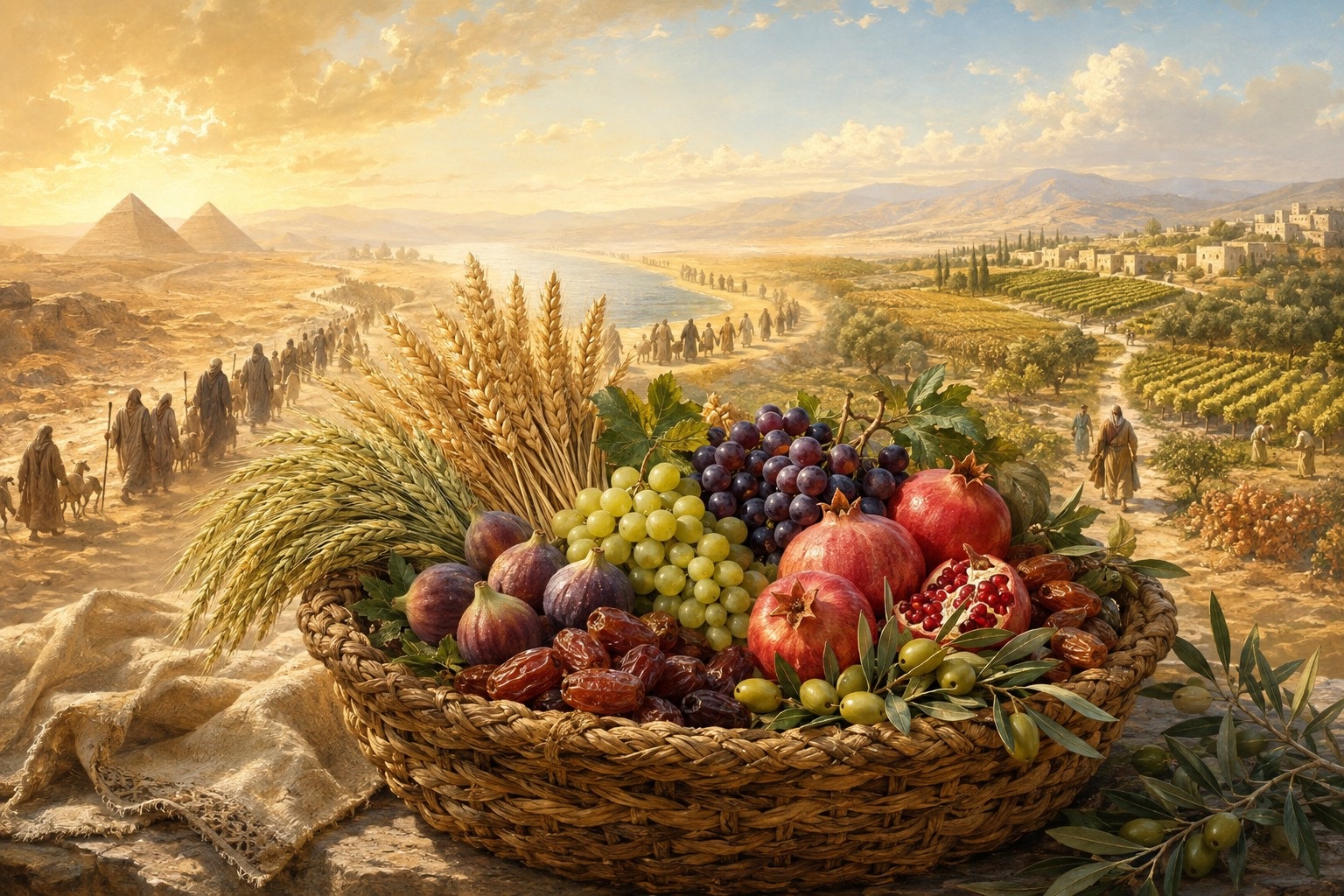
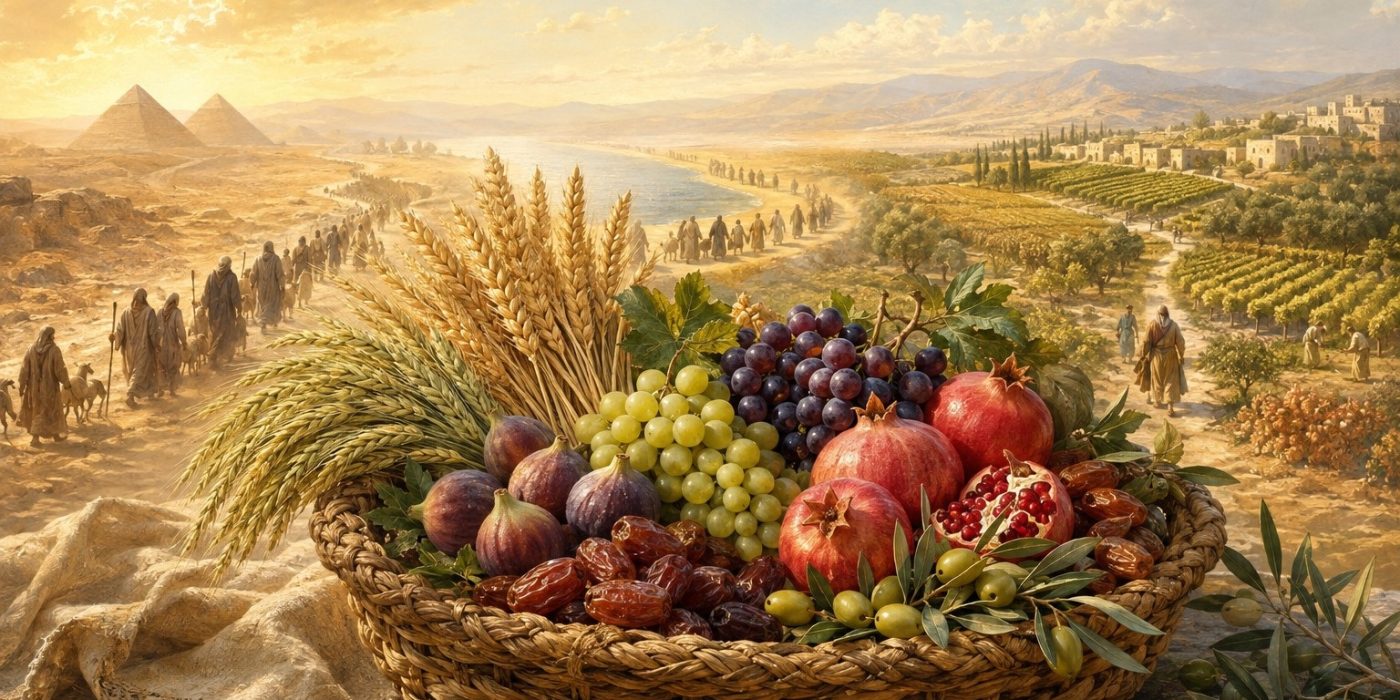
The Torah portion "Ki Tavo" opens with Moses" words to the Children of Israel. When they enter the land, inherit it, and settle in it, they are to bring the first of the first-fruits of their soil to the place that the Lord will choose, thereby expressing gratitude to the Lord. However, bringing the fruits is not all. Every person who brings their first-fruits is also required to recite a few verses known as the "Miqra Bikkurim" (declaration of the first-fruits).
These verses have become one of the best-known passages in the Torah. Although they were originally intended to be recited during the ceremony of bringing the first fruits, from the time of the Sages onward, these verses have become a central part of the Passover Haggadah:
A wandering Aramean was my father. And he went down into Egypt, and sojourned there, few in number; and he became there a nation, great, mighty, and populous. And the Egyptians dealt ill with us, and afflicted us, and laid upon us hard bondage. And we cried unto the Lord, the God of our fathers, and the Lord heard our voice, and saw our affliction, and our toil, and our oppression. And the Lord brought us forth out of Egypt with a mighty hand, and with an outstretched arm, and with great terribleness, and with signs, and with wonders. (Deuteronomy 26:5–8).

Howard Gardner, a professor of education and psychology at Harvard University, argues that leadership is the ability to tell a particular kind of story: a story through which we explain to ourselves who we are, and impart power and resonance to our shared vision. The big questions—Who are we? Why are we here? And what is our mission?—are often answered by way of a story, plot, or narrative.
Rabbi Jonathan Sacks views the ritual of the declaration of the first fruits as one of the central foundations upon which Jewish identity rests. This is a ritual that generates a spiritual and historical revolution along three central axes.
1. The national revolution: turning history into a personal identity story.
At the ceremony of bringing the first fruits, one would expect a person to speak about the land, the rain, and the fertility of nature. Yet the verses of the first fruits passage tell a different story: the story of the wanderings, the slavery in Egypt, the cry, the exodus to freedom, and the arrival in the land.
Rabbi Sacks argues that this is not merely a foundational story, but that a profound innovation is created in the connection between the private fruit in the farmer's hand and the entire national history. The farmer does not merely give thanks for his land and his yield, but recounts how his ancestors went down to Egypt, how they were enslaved, and how God brought them out to freedom and brought them to the land. Moreover, he tells the story in the first person: "And they dealt hardly with us," "And we cried," "And He brought us out." Although he himself was not in Egypt, he inserts himself into the story. Thus, national history becomes the personal biography of each and every individual. The past does not remain behind; it becomes part of the identity in the present.
2. Connection to the Haggadah of Passover
The connection between Parashat Ki Tavo and the holiday of Passover is deep and direct, as the verses regarding the bringing of the firstfruits (Bikkurim) stand at the heart of the "Maggid" section of the Passover Haggadah. Our Sages took a text originally intended to be spoken by a farmer bringing the fruit of his land in the Land of Israel, and transformed it into a text that every Jewish family retells on the Seder night, both in the Land of Israel and in the Diaspora. Rabbi Sacks emphasizes that Judaism does not preserve memory merely in history books or museums. It brings it to life through speech, story, ritual, questions, and communal eating. In every generation, we return to the story, place ourselves within it, and pass it on to our children.
This is a dynamic memory: we do not only learn what happened to our fathers and mothers, but we ask what the meaning of the story is for us today. Thus, memory becomes part of the identity and shared responsibility of the nation.
3. The Holiness of Joy and Gratitude
The Torah portion "Ki Tavo" also emphasizes the obligation of joy: "And you shall rejoice in all the good that the Lord your God has given you." Joy is not merely a spontaneous emotion that arises when things are good for us, but rather a commandment and a religious and social way of life.
Precisely in a moment of abundance and success, a person is asked to stop, look back, and recognize that their success is not taken for granted and is not solely their own doing. The declaration of the first fruits is therefore a counterbalance to the mindset of "my power and the might of my hand." It teaches a person gratitude, humility, and the recognition that they are part of a larger story than themselves.
But the joy does not remain the private property of the landowner. The Torah commands: "And you shall rejoice in all the good... you and the Levite and the stranger who is within your gates." Joy is complete only when it includes those who have no land, security, or abundance of their own.

By outlining a narrative framework into which future generations could also insert themselves and pass it on to their children, Moses transformed the children of Israel, in Rabbi Sacks's words, into a "nation of storytellers"—and in a sense, also a nation of leaders. Every person is not only a listener to the story, but becomes responsible for carrying it, interpreting it, and passing it on.
This is a people bound together by mutual responsibility, one toward another, toward the past and the future, and toward its God.

Rabbi Sacks also applies these insights to the modern era, where affluent and successful societies grapple with deep internal crises. He writes about several points we can learn for our own day regarding the biblical ritual of the first fruits (bikkurim):
1. Gratitude versus the "I deserve it" culture: The biblical reading of the first fruits and the remembrance of "A wandering Aramean was my father" teach us that our success is not taken for granted. It relies on grace, the efforts of previous generations, and belonging to a story greater than ourselves. A person who recognizes this becomes more humble, more grateful, and more aware of their responsibility toward others.
2. Resilience versus Loss of Direction: Societies may forget the story that shaped them and the values upon which they were founded. Rabbi Sacks warns that a society that loses its shared narrative may also lose its identity and its ability to defend its values. Active memory, which not only preserves the past but also gives meaning to the present, is one of the sources of national resilience.
3. Social justice from memory: The memory that we were strangers, wanderers, slaves, and powerless is meant to be a moral engine obligating us to care for the stranger, the vulnerable, and those who do not belong to the majority group. It is not enough to remember the story; the question is what the memory gives birth to within us. The value of the national story is tested not only by our ability to preserve it, but also by the way it shapes our attitude toward other human beings.
And here I return to the reality in our country. While preparing the Torah thought, I read a news item that deeply saddened me:
Ultra-Orthodox youths attacked an Arab bus driver on line 2 in Jerusalem and broke four of his teeth. It is suspected that the attack was racially motivated (Srugim website, Aug 2, 2026)
The actions of those boys do not testify to an entire public. And yet, when youths identified with the world of Torah attack a person because of their background, the contradiction screams out. How is it possible to tell over and again that we were strangers, persecuted, and powerless, and at the same time harm another person simply because he is an Arab?
In my view, this is not only a grave act of violence. It is a desecration of the Torah, a desecration of memory, and a desecration of God's name. If Jewish memory does not awaken in us a responsibility toward the other, and if the story of our vulnerability does not teach us to protect the vulnerable in our society—something profound in the meaning of the story we tell ourselves over and over again is lost!
In the spirit of the month of Elul and the process of soul-searching, we must also ask ourselves regarding our own story and that of our family: What stories are passed down in our family from generation to generation? What values and beliefs were instilled in us? How do these stories influence the way we treat other human beings? Are there stories we would like to preserve, empower, and pass on to future generations, and are there stories that it is time to re-examine, change, or tell differently?
Shabbat Shalom!

Picture of רותי שפירא

Ruthie Shapira

Group facilitator, literature teacher, personal coach. Mom to three grown kids and a fun grandma to two sweet granddaughters. Addicted to stories. Loves traveling.

Parshat Ki Teitzei


Words for Shabbat - A community blog for this week's parashah

Portion Ki Tetze (When you go out to war)

How do we exit the war moral?

By: Willy Siegel

"And you see among the captives a woman of beautiful form... and she shall bewail her father and her mother a full month" (Deuteronomy 21:11–13).

The Torah portion of Ki Teitzei opens with the words: "When you go out to war against your enemies." Seemingly, this is an opening for a portion about war and victory. But it immediately becomes clear that the Torah is also interested in another question: what happens to a person when they are in a position of power—and what war might do to them.

The law of the beautiful captive woman is difficult to read with modern eyes. But precisely for this reason, it is interesting to see how the Sages of the Talmud read it. Rashi, following the Talmud in Kiddushin, writes: "The Torah spoke only against the evil inclination." The Torah does not assume that someone who fights on the just side will inherently be moral. It recognizes that in the midst of war, precisely when power is in our hands, impulses and boundaries also change—and therefore restraint is required.

Maimonides goes a step further. In The Guide of the Perplexed, he dwells on the month during which the captive woman bewails her father and her mother. He writes that she is not prevented from weeping and mourning, "for those who mourn find relief in tears," and adds: "And for this reason, the Torah had compassion on her." Amidst a very violent reality, the Torah suddenly makes room for the grief of the woman from the defeated side.

There is something staggering in this small detail. The soldier initially sees a "beautiful woman" – a figure amidst the crowd of captives. The Torah forces him to stop. She has a father and a mother. She has a past. She has a loss. She has mourning. Before she becomes part of his story, she is a person with a story of her own.

Later in the Torah portion, the Torah returns to the military camp and states: "When you go out in camp against your enemies, guard yourself from any evil thing" (Deuteronomy 23:10). Ramban interprets the verse in a particularly sharp manner. According to him, sin is prevalent in camps going out to war, and even "the most upright of men by nature takes on cruelty and wrath when a camp goes out against an enemy." Therefore, precisely there, the Torah warns: "Guard yourself.".

This is a sobering thought: morality is not a trait we can bestow upon ourselves once and check off the list. Even if we believe in the righteousness of the war, and even if we are proud—and rightfully so—of the aspiration for a moral army, Ramban reminds us that war itself can blur boundaries. Perhaps precisely those who wish to be moral must continue to examine themselves.

And within the large collection of commandments in the Torah portion, the command regarding returning lost property also appears: "You must not remain indifferent" (Deuteronomy 22:3). On a simple level, it is of course about an ox, a sheep, or your brother's lost item. I do not want to turn the verse into a slogan divorced from its context. And yet, these words stay with me: to train the eyes not to look away.

I am reading this week's Torah portion from the Netherlands, and therefore experiencing the war through other eyes as well. Alongside one-sided and sometimes even antisemitic voices, I also hear genuine concern for the severe human toll in Gaza. It is not always comfortable for me to listen to these voices. It is important to remember October 7th, Hamas, the hostages, and Israel's need for security; all of these are a necessary part of the story.

And yet, perhaps the Torah portion of Ki Teitzei asks me not to rush to end the conversation there, and to ask: Even in the midst of an argument, are we still capable of seeing pain that is not our own?

Toward the end of the Torah portion, the Torah returns to those at the margins of power: "You shall not subvert the rights of the stranger or the fatherless... And you shall remember that you were a slave in Egypt" (Deuteronomy 24:17–18). The biblical categories are not identical, of course, to the political reality of our time. And yet, the principle is intriguing: the memory of our suffering does not remain merely a memory. The Torah transforms it into a source of responsibility toward those who are now in a vulnerable position.

And the Torah portion ends with a different memory: "Remember what Amalek did to you." And what is emphasized in the act of Amalek? "He attacked all the stragglers behind you, when you were faint and weary." I do not wish to compare Amalek to any side in today's conflict. The question that interests me is different: What does the memory of once having been weary, straggling, and defenseless do to us when we ourselves are in a position of power?

What happened cannot be changed. But the question of what we do from here can still be asked. Can we hold together the need for Israel's security and the desire for human beings living beyond our borders to have a future of dignity and hope? Are these necessarily two contradictory desires?

Parashat Ki Teitzei begins with the question of how to go out to war. It seems to leave us with a harder question: how to come back from it. How do you return home after years of fear, loss, anger, and power—and remain human beings capable of seeing also the story of someone who is not us.

Perhaps this is another meaning I am hearing this year in the simple and harsh words of the Torah portion:
"You cannot ignore it"

Picture of ווילי סיגל

Willy Siegel

A grandfather to two Swedish grandchildren who now lives in the Netherlands, his country of birth, from where he participates in the study of an Israeli Beit Tefillah and writes words of Torah while thinking about the situation in Israel, where he was educated, served, and worked.

Parashat Shoftim


Words for Shabbat - A community blog for this week's parashah

Parashat Shoftim

How do we keep our gates?

By: Rivi Dror

Judges network – how do we protect our goals?
Parashat Shoftim opens with the commandment: "You shall appoint judges and officers for yourself in all your gates, which the Lord your God is giving you, throughout your tribes, and they shall judge the people with righteous judgment" (Deuteronomy 16:18).
Why does the Torah command that there be both judges and officers? What is the difference between them, and why is one of them not sufficient?


Rashi explains: "Judges — judges who render the verdict; and officers — those who compel the people to follow their commandments." The judge listens, examines the evidence, interprets the law, and decides what the ruling is. The officer is entrusted with bringing the decision from potential to actual. The judge determines what is right to do; the officer ensures that it is indeed done.


Midrash Tanchuma phrases it sharply: “Rabbi Eleazar says: If there is no enforcer, there is no judge” (Midrash Tanchuma, Shoftim 2). That is, if a person was found liable in court but refuses to comply with the verdict, the judge can do nothing without the enforcer to execute the ruling. Justice that has no way to be realized in reality is liable to remain a beautiful and helpless idea. A society cannot suffice with proper laws and just verdicts; it also needs the power to protect and enforce them.


However, the words of the Midrash also raise the opposite question: if there is no police officer – there is no judge: what is a police officer who has no judge above him?
A police officer who is not subject to the law is no longer someone who carries out a reviewed and deliberated judgment. He becomes a force that determines the limits of his own action: whom to protect, whom to arrest, against whom to use force, and which injustice to ignore. Without a judge, without review, and without the obligation to explain and justify his actions, the police officer may cease to serve the law and become the law himself.


Perhaps that is why the Torah is not content with the words "judges and officers," but concludes: "and they shall judge the people with righteous judgment." Maintaining order is not the goal, nor is enforcement an end in itself. The goal is justice. A society can be very orderly and regimented and yet still be unjust. The Torah demands that power serve the law, and that the law serve justice.


The idea of judges and officers can also be taken inward, into the human soul. The holy Shelah, Rabbi Isaiah Horowitz, who lived in the 16th and 17th centuries, reads the verse not only as a commandment for building a society, but also as an instruction for the spiritual work of the soul. He interprets the words "in all your gates" as an allusion to the seven gates in a person's face: the two eyes, the two ears, the two nostrils, and the mouth. These are the gates through which we encounter the world, taking in sights and sounds and uttering words from within us. Upon these we must place: judges and officers.


How true his words are for our times. We must guard our eyes and not believe everything shown to us, especially in the era of artificial intelligence. We must watch over our ears, that they not be attuned to words of falsehood and slander. The nose, too, with its two nostrils, reminds us to stop and breathe before we answer, honk, or flare up in an argument—to slow down and breathe. And following the breath, we must also guard our mouths: our speech, our generalizations, and our shouting.


If we continue the metaphor of the Shelah, we can distinguish between two different internal forces. The internal judge is the force that observes, listens, and discerns. It asks what is right to bring into the soul and what is fitting to remove from it; to which voices I want to listen, how the sights I consume affect me, and what the words I am about to speak might cause. The internal policeman is the force that sets a boundary and executes the decision. It stops a hurtful word before it is spoken, prevents us from getting carried away by an inciting or false voice, and helps us distance ourselves from something we have already realized harms us.


We need both of them. An internal judge without a policeman can reach deep insights and wonderful moral decisions that fail to change anything in life. We know what is right and yet return again and again to the same patterns. But an internal policeman without a judge is also dangerous. It can become a harsh and automatic voice that says: you must not, don't you dare, be quiet. It may enforce within us rules we never chose, rules born of fear, shame, or an attempt to please others. Even within the psyche, power needs discretion, criticism, and compassion.


But the verse is not only about the gates of the individual. It moves between three circles: the individual, the tribe, and the nation. First it says "you shall provide for yourself," then "for your tribes," and finally: "and they shall judge the people with righteous judgment.".
The Torah does not remain with the person who appoints [the judges], nor with the tribe within which the judges operate. It turns its gaze toward the collective: "And they shall judge the people." The judgment is not meant to serve those who appointed the judges, nor solely the interests of the tribe to which they belong. Before their eyes must stand the welfare of the entire nation.


The verse acknowledges that the people of Israel are not made of one piece. Every tribe has its own identity, its own tradition, its own leadership, and its own needs. The Torah does not seek to erase these differences, but it also does not allow each tribe to become a state unto itself. The judges and officers are appointed "for your tribes," but their role is to judge "the people with righteous judgment." The Torah recognizes our right to be tribes, but demands that the judicial system be founded upon the people.

 
This tension is very present in Israeli society. We are a society composed of different tribes. Different groups live within separate systems of education, leadership, authority, and interpretation. There is also great richness in this, and a shared society does not need to erase the different identities within it. The question is what happens when a community or leadership sees itself as subject only to its own laws and authorities, even though it is part of a shared state and its decisions affect the entire public.


This question arises acutely with regard to various groups and publics in Israeli society — from communities seeking to preserve a separate system of authority and law and not see themselves as subject to shared decisions, to extreme and law-breaking leaderships that behave violently toward minorities as if the latter are not entitled to the protection of the law.


Nor is it possible to look away from the Prime Minister’s criminal trial, which has been underway in the country for years. This is not the place to determine his guilt or innocence; but the very fact that the person in power stands before the court brings us back to the insight offered by the "Kli Yakar," Rabbi Ephraim Luntschitz, who also lived in the 16th and 17th centuries, who says regarding "Judges and officers shalt thou appoint thee" — over yourself! He who holds the authority is required to appoint judges who will be able to judge him as well, and he shall hearken to their authority. "Appoint them so that they will be judges and will not flatter even the one who appointed them." The leader is not above the law, and the terror of the law must apply to everyone.


As long as it concerns a way of life, tradition, and communal identity, as expressed for example in Haredi society, great importance is attached to the freedom of every tribe to preserve its uniqueness. But when decisions touch upon the allocation of resources, bearing the burden, security, and the future of the state, it is impossible to see only the needs of the tribe. The right to be a tribe does not exempt one from the responsibility of being a people.


And here the different parts of the verse meet. When the police become more loyal to the person in power than to the law, and when an attempt is made to weaken the judicial system to prevent it from setting a limit on governmental power, the common ground upon which all the tribes are supposed to meet is lost.


This does not mean that every judge is always right or that every police officer is corrupt. It means that a shared society needs a system of law that does not belong to any specific tribe and is not subservient to whoever holds power at any given moment. Without a common playing field, every tribe appoints its own judges and police officers, interprets justice according to its own needs, and the people become a collection of competing power groups.


The verse begins with "Lecha" (to you), passes through "LeShivtecha" (to your tribes), but is ultimately tested by its ability to see "HaAm" (the people). The guarding begins at my gates, but it cannot end only with me or the tribe to which I belong. In order for us to continue being a people, we need judges and officers, borders and laws — but above all, we need a shared ground upon which we can still collectively seek true justice.

 

Picture of ריבי דרור

Rivi Dror

Rivi is a rabbi in an Israeli prayer community, lives in Pardes Hanna, and is the mother of two daughters.

Parashat Re'eh


Words for Shabbat - A community blog for this week's parashah

Parashat Re'eh

Between Blessing and Curse – On Living in the Country with Responsibility.

From: Brigitte Bigard

How interesting that it fell to my lot to deal specifically with this Torah portion, which deals with blessings and curses. 


My Hebrew name is Bracha, and until I studied this Torah portion, I didn't realize how connected it is to the idea of living in the Land of Israel! 


We read in the Book of Deuteronomy, chapter 11: 


Behold, I set before you this day a blessing and a curse: the blessing, if you obey the commandments of the LORD your God, which I command you this day; and the curse, if you will not obey the commandments of the LORD your God, but turn aside from the way which I command you this day, to go after other gods, which you have not known. (Deuteronomy 11:26-28) 


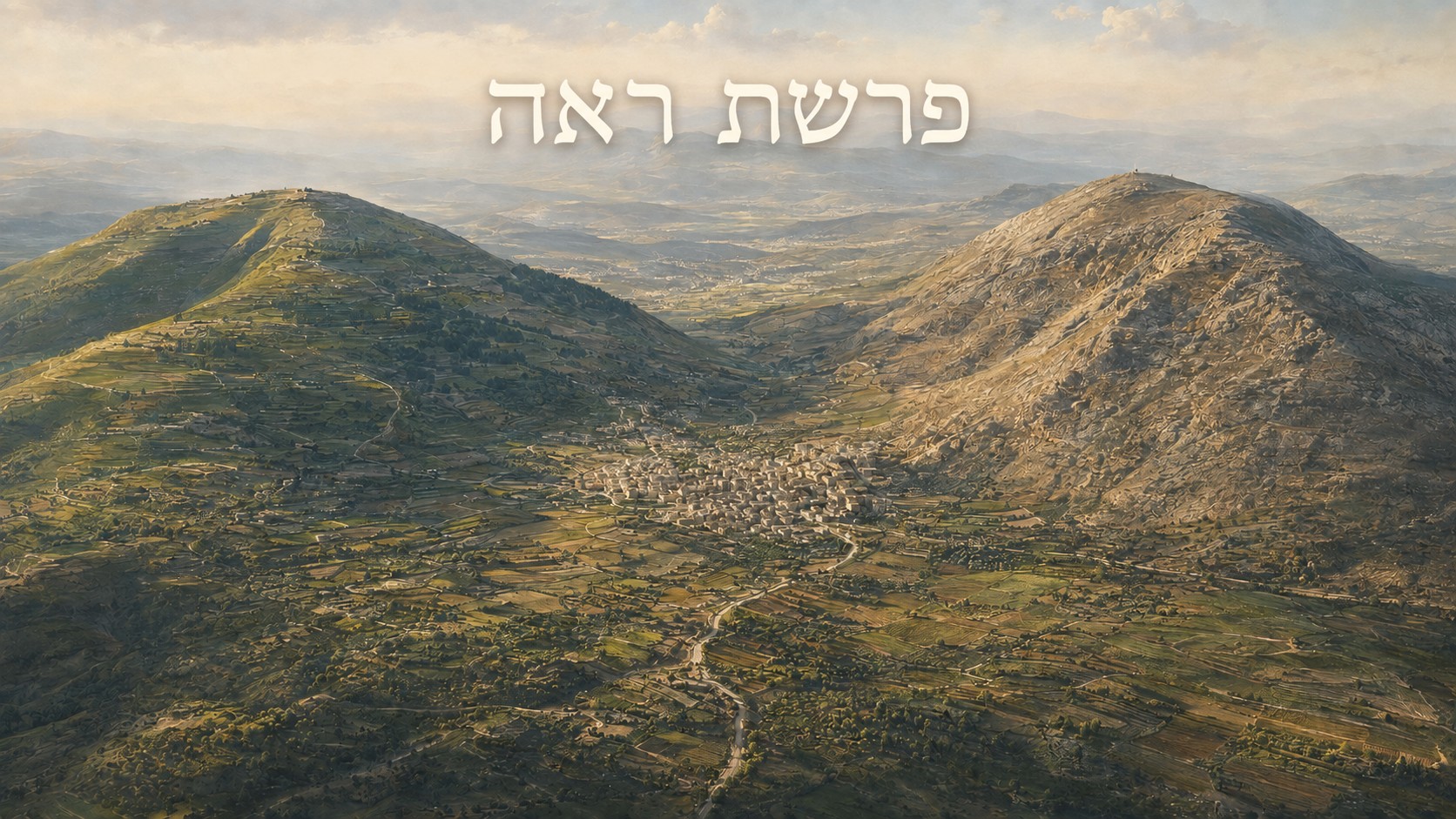
Because blessing and curse are abstract ideas that are sometimes difficult for us to deal with, God asks to plant these ideas in a tangible way and says that when we arrive in the land there will be a ceremony of giving blessing and curse on two mountains: 


"And it shall be, when the Lord your God brings you into the land which you go to possess, that you shall set the blessing on Mount Gerizim and the curse on Mount Ebal." (29) 


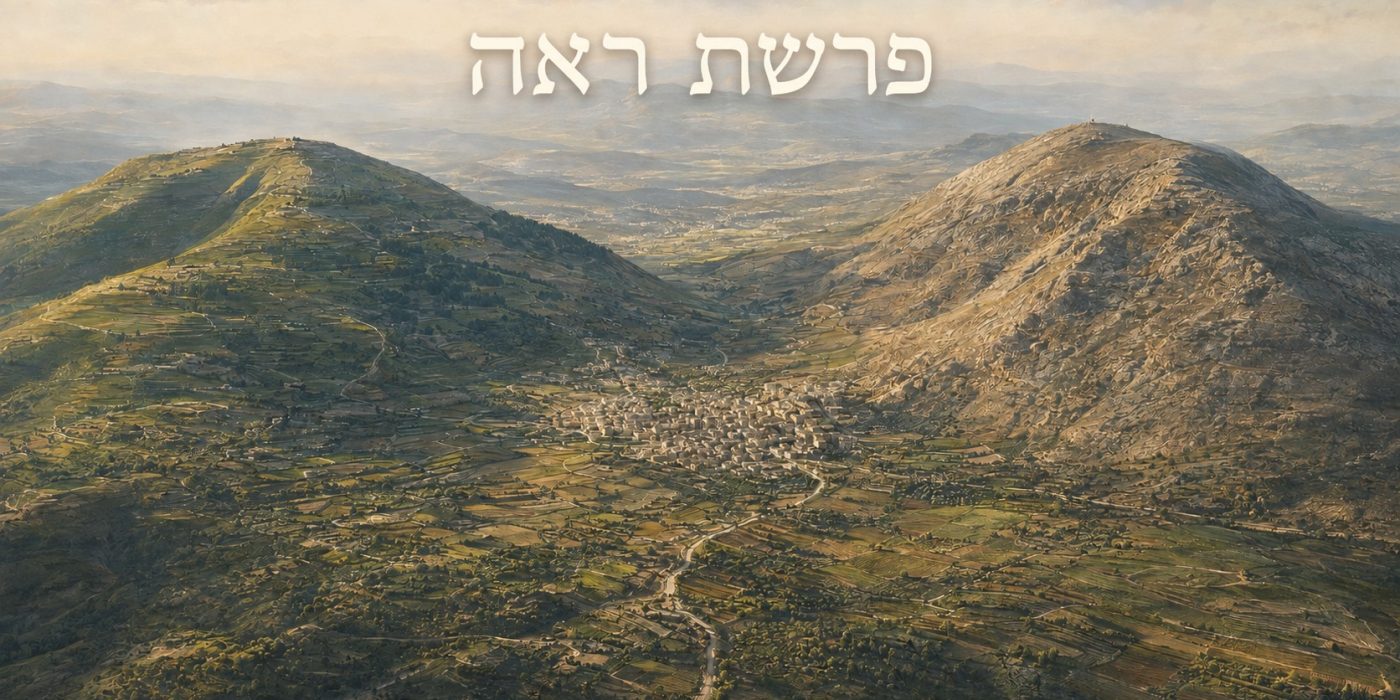
These two mountains stand opposite each other, they surround the city of Nablus, and when you look at them from above you see one mountain covered with trees—Mount Gerizim—and another mountain that is completely barren and without vegetation, which is of course Mount Ebal. Which once again vividly illustrates the blessing as a green and flourishing mountain and the curse as a barren mountain that produces nothing good...  


Shechem is significant in Jewish history and is as ancient as Jerusalem and Hebron, but what is important in my opinion is that Joseph's Tomb is located in Shechem and that the two mountains stand opposite it. Joseph experienced both blessing and cursing in his life and reminds us to this day that every action we take can lead to a blessing or a curse – there is no third option... This awareness should help us behave in the way God expects of us.  


The possibility of planting abstract ideas within a tangible reality is also realized when we "make aliyah.". 


"For you are crossing the Jordan to go in to take possession of the land that the LORD your God is giving you, and you shall possess it and dwell in it. And you shall be careful to do all the statutes and the rules that I am setting before you today."
(31-32) 


God wants us to settle in this land and obey His laws through the constant study of them. As a liberal Jew, I interpret this sentence as a call to "continually adapt the law to the reality surrounding us." We must not worship other gods, but rather concentrate on our laws and observe our commandments. Indeed, it is much easier to do this in Israel than in the Diaspora! Moreover, many laws are related to agricultural matters, and they can only be fulfilled in a land that belongs to us. 


One of the central themes in Parashat Re'eh is the centralization of worship: meaning that sacrificial worship must be performed in the designated place, “the place the Lord will choose.” As part of this effort to centralize worship, there is also a commandment to uproot the places of worship of the idolaters, the inhabitants of the land: 


"You shall surely destroy all the places where the nations whom you are dispossessing served their gods, on the high mountains and on the hills and under every green tree. You shall tear down their altars and smash their pillars and burn their Asherim with fire, and you shall cut down the carved images of their gods and obliterate their name from that place. (Deuteronomy 12:2-3) 


This sounds quite cruel, but I believe God is asking us to uproot idolatry, which also includes the shocking sacrifice of human beings, as described later in the Torah portion, so that we can focus on His commandments and not be influenced by the other nations. We must fulfill our duties and respect all the laws He gave us… God wants us to live pure lives in the land He gave us, to enjoy the food we eat, to work all week, and to rejoice on the Sabbath. 


Since I travel the world a lot, I can promise you that there is no place in the world where I can rest on the Sabbath as I rest here! I feel that the entire land is resting and trying to forget the hardships,
The pains and the worries. The feeling of being part of the majority is a wonderful feeling, which of course I could never experience in Switzerland, my native land. The very connection to people we do not know, simply because they live as we live and feel as we feel, gives the soul tremendous energy, peace of mind, and quiet that open a gate to the comfort of feeling that we are in the right place at the right time.  


Living in the Land of Israel is a very costly thing, and we must preserve this ability. In the Torah portion, it says: 


"When the LORD your God cuts off from before you the nations which you go in to dispossess, and you dispossess them and dwell in their land, take heed to yourself that you are not ensnared to follow them, after they are destroyed from before you, and that you do not inquire after their gods, saying, "How did these nations serve their gods? I will do likewise." (12:29-30) 


The verses continue to warn us not to act as other nations do: we must guard ourselves against the cruelty of our enemies and not follow in their ways. And no less importantly—we must appreciate what we have: our Judaism, the land, and all that we have achieved through hard work, for we have no other land. 


Shabbat Shalom! 

Picture of ברידג'יט ביגאר

Bridget Biggar

Brigitte Bigard divides her life between Israel and Paris-Geneva, and is involved in distributing the anthology "Seven" - which she translated into French. She leads an initiative to write poetry for teenagers affected by the war. A devoted grandmother, a lover of art and classical music, and a frequent reader in French, English and Hebrew.

Parshat Eikev


Words for Shabbat - A community blog for this week's parashah

Parshat Eikev

Between Love and Fear: Two Paths to Faith.

From: Amir Shafat

Parsha summary
In the third portion of the book of Deuteronomy, Moses continues his speech, addressing themes central to the Jewish faith. If the people of Israel keep the commandments of the Torah, God will uphold the covenant and bless them with offspring, crops, flocks and herds, health, and dominion over their enemies. Moses describes the conquest of the land as a gradual process and encourages the people not to fear. Moses warns against haughtiness of heart as a sin that can lead to destruction and exile. The people hear about their past sins: the sin of the calf and the breaking of the tablets of the covenant, the sin of the spies and the forty years of wandering in the desert. Despite the sins, God continues to choose the people of Israel and commands
He must adhere to the Torah. „And it shall be, if you earnestly obey,” the second part of the Shema, is taken from the portion of Eikev. Finally, the people of Israel receive the promise of long life and inheritance of the land in peace and security.


Three portions were joined together to create „Shema Yisrael”: the "Shema” portion from the book of Deuteronomy, the "Vehaya Im Shamoa” portion, which is in this week's Torah portion, and the Tzitzit portion from the book of Numbers. The first two portions are written on every mezuzah and are also included in tefillin. Yet, I am confused every time I hear or read them.


"And you shall love the Lord your God with all your heart and with all your soul and with all your might” (Deuteronomy 6:5) from the Parashat Va'etchanan command is about absolute love and devotion, without reason and without purpose. There is no attempt here to give a reward for the commandment or to explain it. In contrast, in this week's Torah portion it is written: "And it shall be, if you will diligently listen to My commandments” (Deuteronomy 11:13), a logical and clear explanation is given for the reward of the commandments, and also a threat of what will happen if we do not fulfill them.


Isaiah Leibowitz interprets, according to Maimonides, unconditional love of God as serving God for His sake alone, and fear of God out of a desire to receive a reward or out of fear of punishment as serving God not for His sake. The large gap between these two approaches, which appear within the Shema and in close proximity in Moses' words, cannot be a coincidence or a mistake.


There may be room for both approaches: there are Jews who will observe commandments for reward, and there are those who will serve God out of pure love. Alternatively, it is possible that the approaches diverge over time: sometimes a person sees the personal request for reward as a childish stage of faith and can serve God with all their might, but sometimes they cry out to heaven for personal and specific help, and even bargain and make vows in exchange for reward.


Perhaps work that is not for its own sake is everyday belief, and we strive to reach a higher level of unconditional belief. Whether between one person and another, or between different times or levels of belief, the two approaches coexist, contradict each other, and perhaps even complement each other.


"and now, Israel, what does the LORD your God ask of you? Only to fear the LORD your God, to walk in all His ways and to love Him, and to serve the LORD your God with all your heart and with all your soul.”.
And here are the three principles of our Jewish lives: reverence, love, and work.


Shabbat Shalom.

Picture of אמיר שָׁפַט

Amir judged

Amir Shaft is the father of two teenagers, lives in western Ireland, is a professor of physiology, a cyclist, a Jewish believer, and a people person.

Parashat Va'etchanan


Words for Shabbat - A community blog for this week's parashah

Parashat Va'etchanan

Why did Moses' leadership end, why was it Joshua's time, and what is the connection to our present day?

From: Ronen Keller

The question of why Moses, the greatest of prophets, the man who led the Israelites out of Egypt, brought down the Torah from Mount Sinai, and guided the people for forty years, did not merit bringing the people into the Land of Israel is one that occupies many. Is it merely a consequence of his alleged sin when he expressed doubt, or is there a more "rational" answer to this question?.

 
I have been involved in leadership for most of my adult life – teaching, researching, and also leading myself at times. I want to offer the leadership perspective.
The Torah may be trying to tell us that leadership is not just a quality of an individual, but a fit between the person and the task before him and the generation. Professor Micha Popper, recipient of the Israel Prize for Management Sciences in 2026, and my teacher and mentor, has written many studies and books dealing not with the leader himself, but with the social situation and the followers. In recent years, Professor Popper accompanied the civil awakening of January 23 and recently published his book "When the Public Rises - The Awakening of the Best Israeli Identity." The book documents and analyzes this tremendous social movement and also offers courses of action for the future.


And let's return to Moses. He was the leader the people needed to go from slavery to freedom. He was a revolutionary; he shattered the old order and stood up to Pharaoh. He shaped a new national identity, gave the people a vision and values, and transformed a collection of slaves into a people with a destiny. This was leadership of profound change, of inspiration, and of creating a new reality.
After forty years in the desert, the mission changed.
The challenge is no longer to convince people that it's possible to dream of the Land of Israel. The challenge is to build it. To conquer, divide the land, establish institutions, manage disputes, lead different tribes, and create a routine of life for a free people in its land.
Different leadership is needed.


Joshua ben Nun is not a “mini-Moses.” He is a different kind of leader. Less charisma and more perseverance. Fewer miracles and more hard work. Less of a new vision and more of the realization of the vision that has already been created. Joshua does not ask, “Where are we going?” but rather suggests, “How do we get there?” He understands that the historical moment on the eve of entering the Promised Land requires a transition from arousal to action.
This is one of the most important lessons about leadership: there is no one-size-fits-all model. The question is not who is the greater leader, but what leadership is required in a given reality. I am also thinking about this lesson in the Israeli reality of recent years.


In January 2023, an unprecedented civil awakening arose in Israel. Hundreds of thousands of citizens, myself included, from all sectors of Israeli society, took to the streets out of a deep sense of responsibility for the country. We hadn't seen ourselves as activists before. We established organizations, led initiatives, mobilized volunteers, forged new partnerships, and proved that civil society has immense power. The engine behind this awakening was leaders who knew how to offer a vision and show the way to the masses who came.

 
After October 7th, the same civilian leadership emerged with even greater strength. The same people enlisted in the reserves, established aid networks, cared for the displaced, farmers, families of hostages, and systems that the state struggled to operate at the required speed. Civil society once again proved that it is capable of anything, as long as there are those who offer direction and lead towards a common goal and purpose.
I think we've reached an inflection point. The point where a significant turning point occurs, changing the entire reality.


Protest and social activism are essential tools in a democracy. They are the wake-up call that alerts, warns, corrects, and reminds the government that it serves the public. However, civil protest cannot be the permanent state of a society. Ultimately, decisions are made in the Knesset and the government, in local authorities, and in public service. That is where laws are written, budgets are set, institutions are established, and policy is built.

If the leaders of the civil awakening remain only outside the system, they may leave the building work to others.


Therefore, it seems to me that the time calls for a transition from the leadership of Moses to the leadership of Joshua. Not a transition from values to politics, but a transition from values expressed in the street to values that shape the country. Not a surrender of activism, but its natural evolution. The demonstration is not the end of the road; it is the beginning of responsibility.


Joshua did not begin his journey on the day he was appointed leader. For years he learned from Moses, served, commanded, bore responsibility, and prepared himself for the moment he would be called upon to lead. In our society too, people are needed who are ready to take the next step – to run for office, to serve in the Knesset, in local government, in government ministries, and in public service, and to turn the values they fought for into policy and action.
Perhaps this is the message the Torah seeks to teach us: there is a time to part the Red Sea, and there is a time to pave roads in the promised land. There is a time to take to the streets, and there is a time to enter committee rooms, the plenum, government offices, and decision-making centers. Both tasks are essential, but each belongs to a different social situation.


Our generation's challenge is not only to fight for the character of the State of Israel and Israeli society, but also to be ready to build it. This is the transition from Moses to Joshua—from a leadership of awakening to a leadership of fulfillment.

And the political context requires no elaboration. Get up and fix it!


Shabbat Shalom!

Picture of רונן קלר

Ronen Koehler

Ronen Keller is an organizational consultant, social activist, one of the leaders of "Brothers in Arms," and chairman of an Israeli activist center.

Things

Words for Shabbat - A community blog for this week's parashah

Book of Deuteronomy

Words for Shabbat

""Turn it over and turn it over, be absorbed in it" is what is said about the Torah: Study the Torah from all sides, because each time a different and new aspect and interpretation of the Torah can be revealed. This year we are renewing ourselves with a new section in the newsletter: "Words for Shabbat" - each week we will publish in the newsletter and on the Beit Tefilla website a Torah passage - a few words about the week's parashat from one of the community members and Beit Tefilla staff. And just as their faces are different, so are their opinions - we will wait to read the personal interpretation and learn what the encounter with the parashat brings up in them.

פרשת דברים

Deuteronomy

Dr. Esti Doron on the Parashat D'varim – Between Moses" "Eichah" and Isaiah's "Eichah"

פרשת ואתחנן

Parashat Va'etchanan

Ronen Keller on the "V'Etchanan" affair:
Why did Moses' leadership end, why was it Joshua's time, and what is the connection to our present day?

פרשת עקב

Parshat Eikev

Amir ruled on the Ekev case.
.Between Love and Fear: Two Paths to Faith

פרשת ראה

Parashat Re'eh

Between Blessing and Curse – On Living in the Land with Responsibility. Brigitte Biggar on Parashat Re'eh

פרשת שופטים

Parashat Shoftim

Rivi Dror on Parashat Shoftim – How do we guard our gates?

פרשת כי תצא

Parshat Ki Teitzei

Parshat Ki Teitzei (To War): How do we emerge from war moral?
By Willie Siegel

פרשת כי תבוא

Parshat Ki Tavo

The Torah portion of the declaration of the first fruits teaches us that our national story becomes meaningful only when we see it as part of our personal story, express gratitude for the good we have received, and translate memory into responsibility toward the other.

Deuteronomy

Words for Shabbat - A community blog for this week's parashah

Deuteronomy

Between Moses's "Eicha" and Isaiah's "Eicha"

From: Dr. Esti Doron

The Parashah of.
Deuteronomy differs from the four preceding books of the Torah. According to tradition, it contains Moses' final sermons before his death – farewell addresses, summaries, and a testament to the generation about to enter the land. Precisely because of this, the question arises: why is it necessary to repeat events and laws that have already been mentioned? One answer is that the generation has changed, and national memory needs to be reshaped. Alongside traditional interpretations, biblical scholars view Deuteronomy as a compilation made in a later period with a unique ideological message.


This portion features five main themes.

Chapter 1 of the parsha begins with a precise description of the place where Moses spoke to the people: 'These are the words that Moses spoke to all Israel beyond the Jordan, in the wilderness, in the Araba, opposite Suf, between Paran and Tophel, and Laban, Hazeroth, and Dizahab." Commentators claim that in this detailed verse are hidden the following sins: the sin of the manna and the people's complaints that the food in Egypt was tastier (Midbar); the sin of idolatry and following the daughters of Moab (Arvot Moav); the sin of testing at the Red Sea during the escape from the Egyptians and the people's complaint that Moses led them out of Egypt to die in the wilderness; the sin of the spies (Paran); the sin of the sons of Korach (Hazeroth); the sin of the Golden Calf (Di Zahav). The sin of the spies is also explicitly mentioned later in the chapter.


Among the many topics in the portion, I have chosen to focus on two, which are intertwined: the judicial system that Moses establishes and the message conveyed in the Haftarah of Shabbat Chazon. Moses recalls the governmental structure of the Israelites in the desert. Moses, the greatest of the leaders who arose for the Jewish people, concludes that he cannot bear the burden of leadership alone. He appoints officers and officials to assist him in the task of leadership, and they will share the burden with him: "And I took the heads of your tribes, wise and knowledgeable men, and I gave them as heads over you, rulers of thousands, rulers of hundreds, rulers of fifties, and rulers of tens, and officers throughout your tribes." In addition to officers and officials, Moses also appoints judges and warns them to judge justly, to treat distinguished people the same way they treat common people, and not to fear anyone in their tribe in the judgment seat: "And I commanded your judges at that time, saying, "Hear between your brethren, and judge righteously between a man and his brother and between his stranger. You shall not show partiality in judgment; you shall hear the small as well as the great; you shall not be dismayed at the face of man, for the judgment is God's. And the thing which is too difficult for you, bring it to me, and I will hear it.'".


The connection to the Haftarah of Shabbat Chazon, Chapter 1 of Isaiah, is almost self-evident. Since the portion is read the Sabbath before the Ninth of Av (Shabbat Chazon), the Haftarah deals with the spiritual and leadership state of the people. Isaiah does not hold back in his criticism of the dire situation the people are in, their preference for observing commandments over social justice. Isaiah rebukes the people who focus on the worship of God, which includes sacrifices, pilgrimages, and meticulous observance of the minutiae of commandments and laws:.


The subject of justice is a central theme in the Haftarah, but also in the Parashah. It is not for nothing that Moses mentions the judges and the unequivocal demand not to show favoritism in judgment and to judge justly. I feel that we are at a critical test point these days, in the context of the relationship between the legislative and executive authorities and the judiciary. As public trust in the justice system and the motives of judges erodes, so does the ground beneath the legitimacy of their rulings. In a situation where there is no law and no judge, compassion disappears and justice becomes relative, not absolute. Such a reality, where judges lack legitimacy, breeds dangerous anarchy. I am hopeful that we will learn from the past and succeed in restoring public trust in the justice system and its ability to administer justice impartially. 


This may also be one of the central messages of the Parashat Devarim before Tisha B'Av: Destruction does not necessarily begin with an outside enemy, but with the cracks that open in the justice system, in leadership, and in the trust between person and person.. Between Moses" "Eikha," which describes the difficulty of bearing the burden of leadership, and Isaiah's "Eikha," which warns of a society that has lost its way, stands the "Eikha" of Tisha B'Av – a reminder of the price of destruction. My hope is that this "Eikha" will remain a relic of the past, and not, God forbid, become the "Eikha" of our days..


Picture of ד"ר אסתי דורון

Dr. Esti Doron

Esti Doron is a Doctor of Education who specializes in teacher training, evaluation of educational projects, and fostering educational leadership. She is married, a mother of three, and a loving grandmother to two grandchildren.