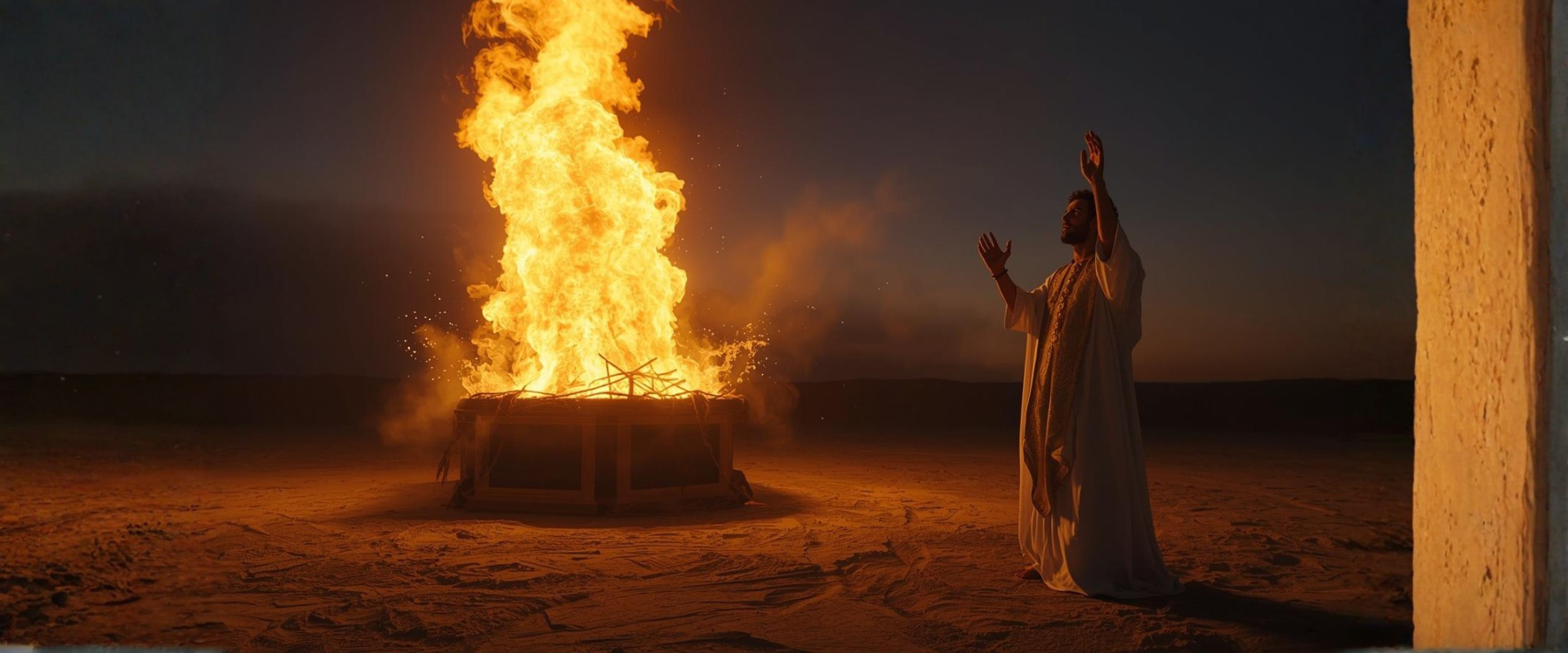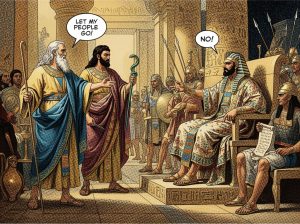
The parashah Vaera is the second parashah in the Book of Exodus, the parashah in which Moses and Aaron begin negotiations with Pharaoh for the release of the Israelites from Egypt. The parashah opens with God's revelation to Moses and an explicit repetition of the promise God made to the patriarchs to give the Israelites the land of Canaan to dwell in. God also tells Moses that He hears the suffering and hardship of the Israelites and will therefore save them and bring them out of Egypt. This is a promise of redemption. In fact, this is the second time that God has appeared to Moses, appointing him as the leader who will redeem the people and making the same promise to him. The first time was at the burning bush. Why was a second time necessary? Because Moses' mission failed the first time. The first time Moses and Aaron went to Pharaoh to ask him to release the people so they could sacrifice to God in the desert, Pharaoh refused and increased his burden on the people. And since the first time failed, it was necessary to repeat the same promise and the same appointment. I learn from this that we must persevere in our tasks and not despair if we do not succeed immediately.. Consistency and perseverance lead to success. But the big surprise comes when Moses and Aaron arrive with the news of redemption for the people. The text tells us that the people did not listen to Moses" words "because of their impatience and hard labor." They were so busy with their daily lives, with their current hardships, that they became indifferent to Moses' words because they had lost hope.
When I think of hope, the phrase "Hope dies last" comes to mind, which is an expression that originates from a quote by Nadav Goldstein He was murdered on October 7 in Kfar Aza along with his daughter Yam, and became a symbol of resilience and hope. His three children were kidnapped to Gaza, and when they were released from captivity after 51 days, his daughter Agam posted the sentence, "Hope dies last, right, Dad?" This sentence became a mantra for the family and the community, calling on them to rebuild their lives and their kibbutz after the attack; a mantra calling on them not to give up hope.
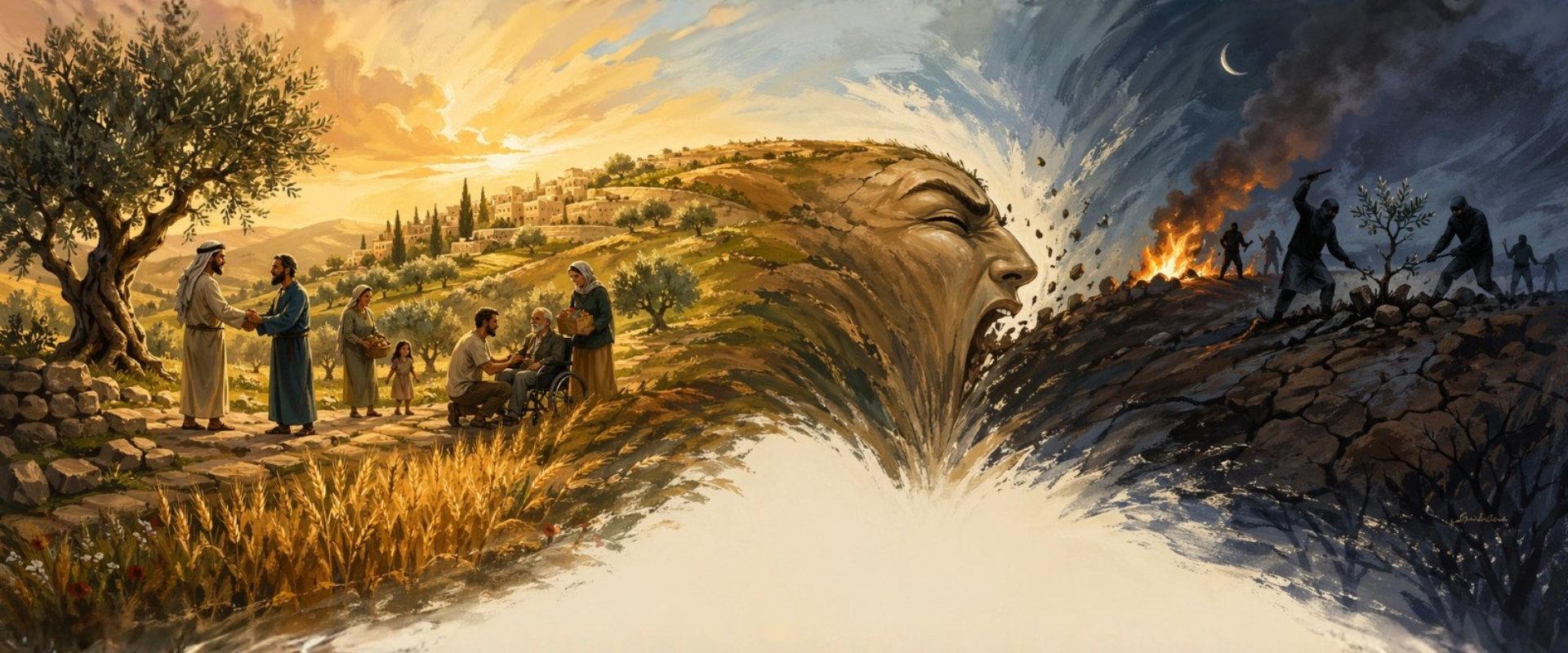
Later in the story, Moses and Aaron go to Pharaoh and ask again to let the people go to the desert for three days to sacrifice. Pharaoh refuses, and then the plagues begin. The parashah Vaera includes seven plagues: blood, frogs, lice, wild animals, pestilence, boils, and locusts, with Aaron actually performing the first two plagues of blood and frogs. And the Lord said to Moses Say to Aaron Take your staff and stretch out your hand over the waters of Egypt, over their rivers, over their streams, over their ponds, and over all their reservoirs of water, and there shall be blood.and there shall be blood throughout all the land of Egypt, upon the wood and upon the stone. And Moses and Aaron did so, as the Lord commanded, and he lifted up the rod and struck the water that was in the river, in the sight of Pharaoh and in the sight of his servants. his servants..."
(Exodus, 7:19-20)
The fact that Aaron, and not Moses, is the one who performs these plagues is related to "gratitude." According to commentators, Moses was saved as a child thanks to the Nile, and it is not fitting that Moses should strike it and turn it into blood. On the surface, it seems natural to recognize kindness, but in our daily lives we repeatedly struggle to see the good, to acknowledge invisible people and thank them, and we take kindness for granted. In my opinion, this is a lesson that is no less profound than the hope for a better future: even in the midst of a difficult struggle, and even when there is still no liberation in sight, there are things that we must not lose along the way. Recognizing the good is not a luxury of good days, but a foundation that sustains the spirit, especially in times of impatience and hard work.
Gratitude is perhaps one of the simplest and most profound acts that enable us to break out of apathy and not close our hearts to life's difficulties. In recent years, I have been trying very hard to increase my awareness of gratitude and appreciation. Not to take everything I have for granted, but to pause for a moment and recognize the good in it. One of the moments I really love about welcoming Shabbat at the Israeli House of Prayer is saying thanks for something that happened during the past week. I remember during the coronavirus pandemic, when I was having a really hard time with the lockdowns and the fear, I would go out for a walk and make a mental list of all the good things I have. I would give thanks for my legs, which I stand and walk on, thanks for the air I breathe, thanks for the sun that came out in my honor during my walk. Even in the last two years, which have been very difficult, I try to continue this practice and increase my gratitude; I try at least once a day to stop and give thanks for everything I have. Not because everything is good, but so as not to lose the ability to hear promise, even in times of impatience and hard work, even when redemption is still far away. Perhaps in this way, with small steps of gratitude, it is possible to keep hope alive. I recommend adopting this habit as a way of life.
Shabbat Shalom!