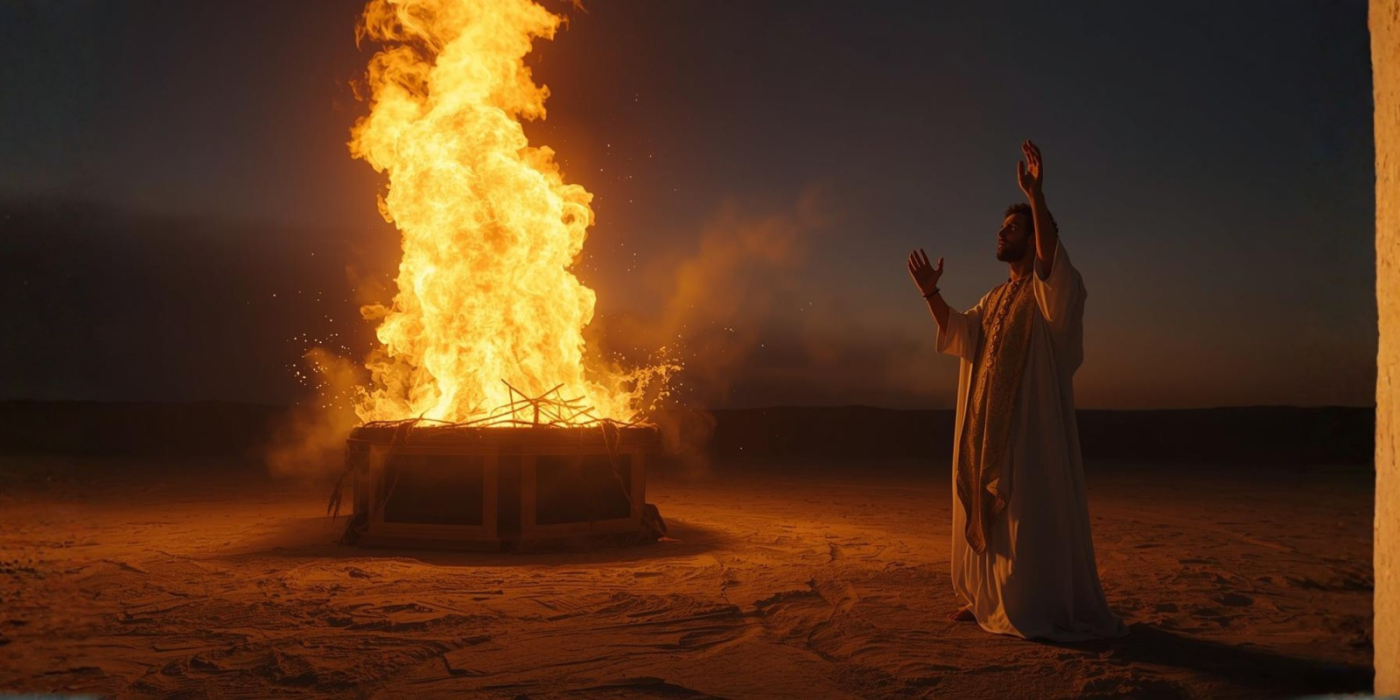
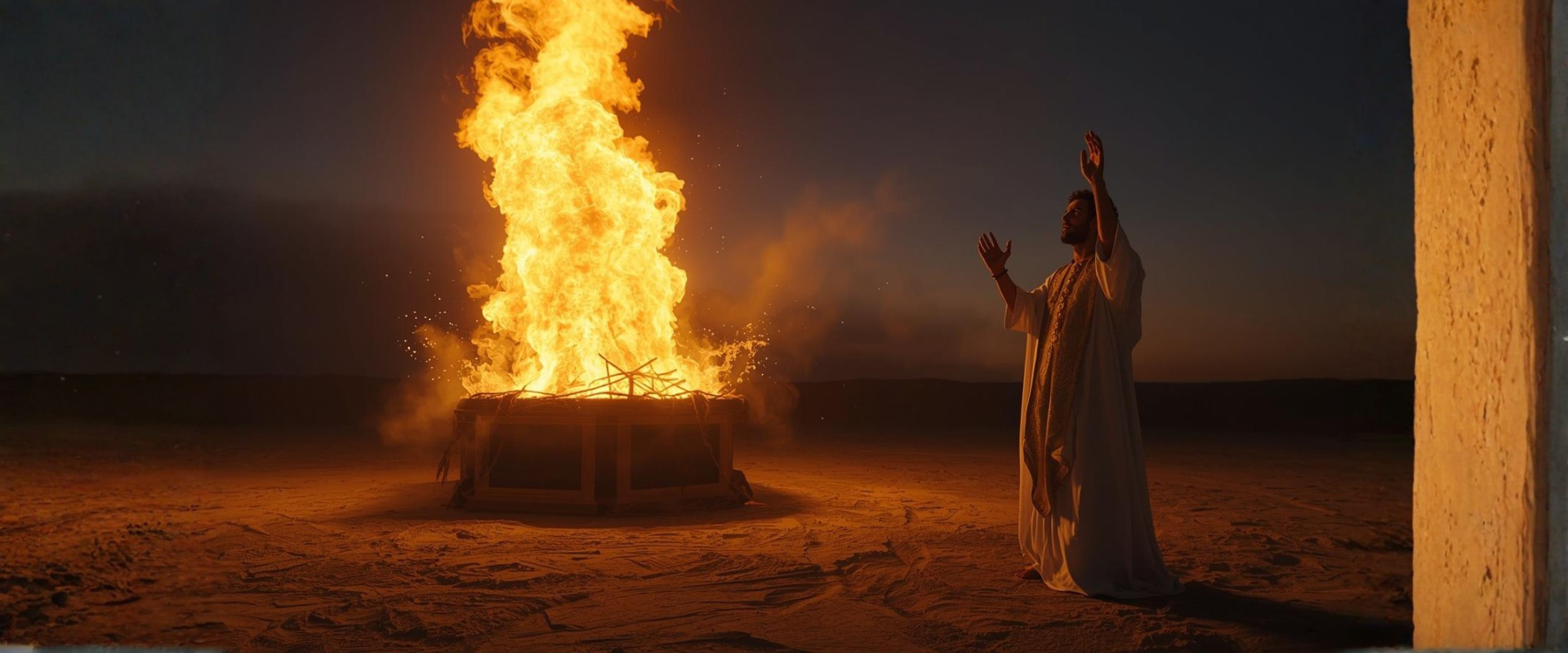
Parashat Shemini opens at a moment of climax: the eighth day of the inauguration of the Mishkan. After seven days of preparation, fire appears from heaven and validates human work. This is a moment of connection between heaven and earth, between human initiative and divine approval. But precisely within this moment of climax, a great rupture occurs: Nadav and Avihu "take initiative" and offer 'strange fire, which He had not commanded them," and they die by fire that came forth from the Lord. The sharp transition from spiritual elation to disaster shakes the reader, but it also sharpens a fundamental principle: where there is holiness, there are also boundaries; and a leader bears heavy responsibility, not only for the role and its limits, but for the entire public, because they represent the entire public.
At the beginning of the parsha, we encounter Aaron at a pivotal moment: his entry into the role of High Priest. However, instead of enthusiasm or confidence, the Torah hints at hesitation: "Draw near to the altar" - Moses has to call him, to urge him on. The Sages describe Aaron as one who was "ashamed and afraid to approach." Why? This can be understood on several levels:
Awe: The direct encounter with the Divine Presence evokes a natural trembling; the memory of the sin of the Golden Calf – Aaron carries within him a deep sense of guilt and asks himself if he is worthy of being the one to atone for the people; and also the psychological transition from being "number 2," a partner and advisor to Moses (but without public responsibility), to the status of the official leader, the "High Priest.".
And there is also another dimension here: true leadership begins with recognizing the depth of responsibility. Aaron understands that the role is not just an honor but a heavy mission towards the people. He is the one who must stand between the people and God, atone, represent, and bear. Here Moses intervenes and tells him: "This is why you were chosen!" Not because you are perfect, but because you are willing to bear responsibility.
And opposite Aharon, the balanced and calculated (some would say hesitant), stand his sons Nadav and Avihu – the galloping horses. The second generation that takes on leadership sometimes without understanding its true cost. They are the sons of a High Priest, full of passion for serving God. But it is precisely this passion that leads them to transgression: 'strange fire which He had not commanded them." Our Sages offer various explanations: drinking wine, pride, independent ruling. But the common denominator is clear: action without sufficient responsibility to the framework and the community. They acted out of a desire to draw closer, perhaps even to intensify the spiritual experience. But they did not ask the central question a leader must ask: What is the meaning of my action for the system? For the people? What is the purpose of our leadership? They saw themselves at the center, not the role.
When a leader conflates their social role with their personal considerations, they damage public trust, the stability of the system, and trust in leadership itself. We see in the State of Israel the terrible price we pay when leaders misunderstand their responsibility to the whole and mix their personal interests with it. This, of course, happens in the Israeli government, but unfortunately, it also happens a lot in the IDF and other places based on leadership. Commanders and managers absolve themselves of responsibility by claiming "they are not to blame." Blame requires proof. Responsibility is inherent in the definition of leadership. When we demand a state commission of inquiry, we are demanding that our leaders allow other people to examine their performance and responsibility in order to learn and fix things, not necessarily to punish.
But, at the moment of crisis, Moses reveals himself as a complete leader.
He not only interprets the event, nor only manages it. He understands he is responsible for the entire nation: for the understanding of the event, for preserving trust in the system, for the continued proper functioning of the Tabernacle, and for maintaining Aaron's position as leader. Moses does not look for culprits; he does not ask "Who is to blame," but rather asks "What is needed now to hold the public together.".
And this is a critical point:
True leadership is not just about inner truth, but also about public influence. A leader must ask: Do my actions strengthen the public or undermine it? Do they create stability or chaos?
In summary, three main challenges arise from the case:
- Aaron's Hesitation to Lead: Am I worthy? Am I capable of bearing the responsibility towards the public?
- The temptation for Aaron's descendants to innovate without limits: The desire to influence, to innovate, but without considering the broader consequences.
- Moshe's ability to bear systemic responsibility for holding people, the system, and the public accountable, especially in times of crisis.
Leaders always operate under pressure, criticism, and a constant desire to show initiative. But the affair reminds us of a simple, uncomfortable truth:
Leadership is not a privilege – it is a responsibility to the public.
This responsibility requires:
Consider every action not only by intention but also by expected results.
To understand that an initiative that is not coordinated or controlled can damage public trust.
To know how to distinguish between guilt and responsibility: not to get stuck searching for culprits, but to move forward to conscious choice and correction.
And remember that every decision is examined not only at the moment but also by its impact on the entire social fabric.
Responsibility is a choice to act in a way that serves the greater good, even at personal cost.
True initiative is not just the courage to act—but the wisdom to understand when and how to act.
Today's leadership requires balancing humility with initiative, boundaries with freedom, and most importantly, remembering:
The leader does not act for himself. He carries an entire public on his shoulders.
Leadership is both a resource and a journey.
Shabbat Shalom!