The parashah 'Vayakhel' begins with the words:
"And Moses gathered the All the congregation of the children of Israel, and said unto them, These are the words which the Lord hath commanded, that ye should do them' (Exodus 35:1), and later it is said again, "And Moses said unto the children of Israel, Build ye unto me a sanctuary, that I may dwell among them" (Exodus 25:42). All The congregation of the children of Israel, as it is written (Leviticus 4).
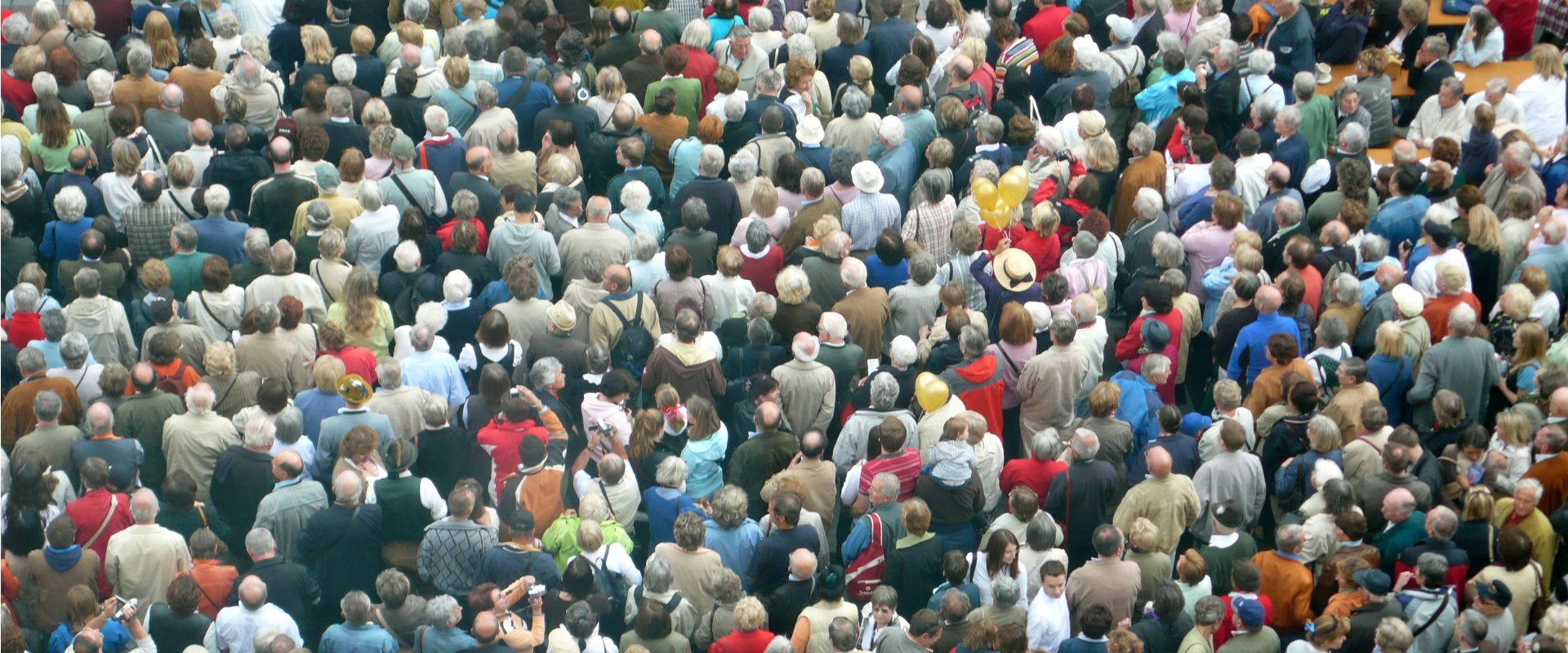
The word All She plays a leading role in the story, teaching us that the entire community of Israel, men and women alike, took part in building the Tabernacle. Everyone contributed, and everyone worked on the project.
These words are written on the afternoon of Purim. Last night we read the Book of Esther, in which Esther also asks
From Mordechai, "Go gather the All The Jews who are in Shushan.".
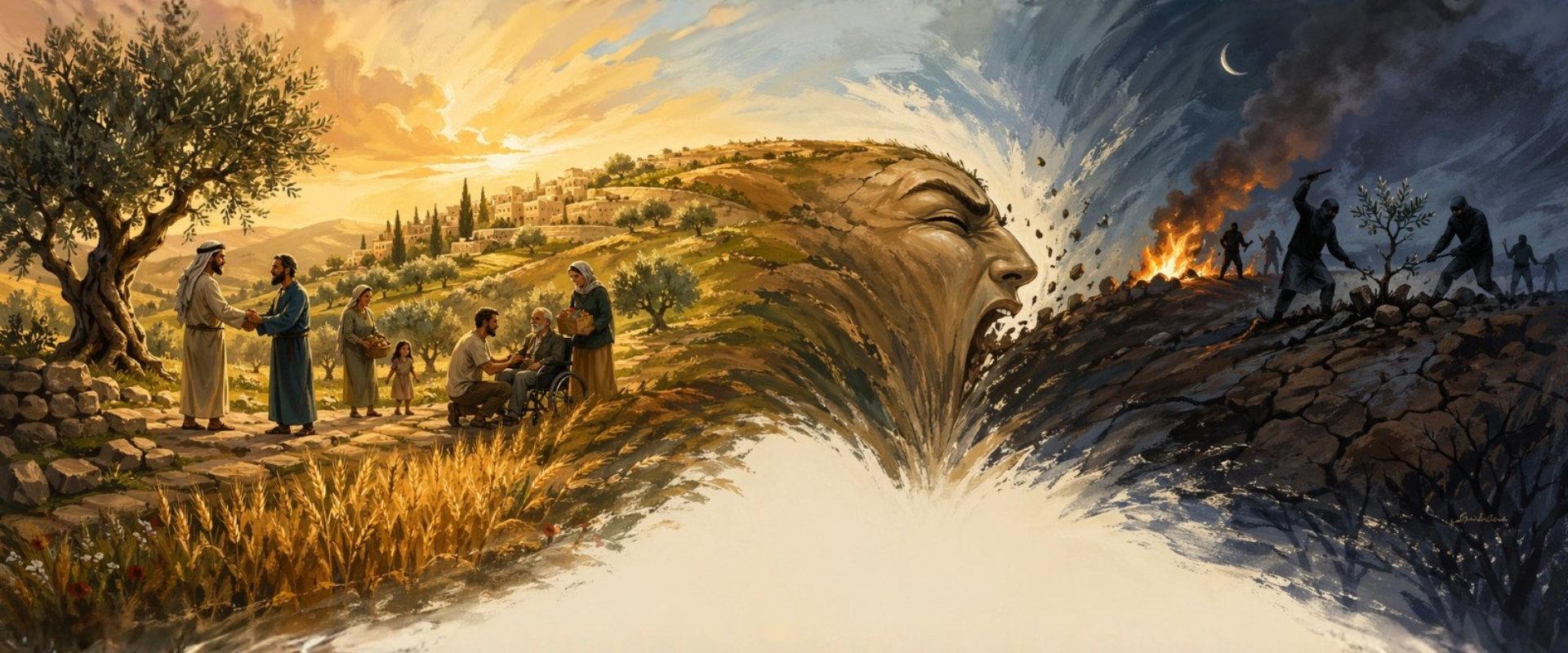
commandments The audience and the gathering, emphasizing Everything In both cases, during the inauguration of the Tabernacle and in times of trouble and distress, we are taught about the importance of unity and cohesion and the danger of division and fragmentation. "And Haman said to King Ahasuerus, "There is a certain people scattered and dispersed among the peoples in all the provinces of your kingdom. Haman the Agagite, of the seed of Amalek, points out the The separation As a sign that he would be able to defeat Mordechai and his people.
Even in the description of the Tabernacle, the Tent of Meeting, after the detailed description of all the various materials and the multitude of parts and tools, their descriptions and measurements, the text returns and mentions twice the cohesion and completeness of all the parts.
.(The Tabernacle. "To connect the tent to be one" (Luke 19 ). "And the tabernacle was one"(Luke 13).
The Tabernacle vessels symbolize the union of opposites. to unite The United:
A special commandment was given regarding the menorah of the Tabernacle: "He shall make the menorah of pure gold" (37:17). "Three branches of the menorah shall be on one side, and three branches of the menorah shall be on the other side" (37:18). "Its stems, its bowls, its knobs, and its flowers shall be of one piece with it" (37:17). "It shall be made of pure gold, hammered work" (Exodus 37:22).
The union of opposites is also reflected in the priestly garments, particularly the sash and the ephod. They are made of shatnez, a mixture of wool and linen, with special permission from the Torah, during Temple service.
The unification of opposites also characterizes the breastplate. Twelve stones, each stone unique "And the stones shall be according to the names of the children of Israel: twelve according to their names, engraved like the engravings of a signet, each according to his name, for the twelve tribes" (Leviticus 39:14). All twelve stones, symbolizing the twelve tribes, are united on the square of the breastplate.
The symbolic meaning of the union of opposites in the breastplate and staffs, the rods of the menorah, in the national context, is an expression of unity with Israel in all its diversity and colors.
"This is the essence of perfect peace.
Strive for peace
Between two extremes.".
Rabbi Nachman of Breslov
Abbreviation of Likutei Moharan, letter A.
The parashah "Vayakhel" opens with the first commandment, "Six days you shall do work, but on the seventh day you shall have a holy sabbath" (Leviticus 24:31). After this first commandment, there is a transition back to the work of building the Tabernacle, a kind of parallel between the six days of God's creation of the universe, the six days of work, and the work of building the Tabernacle.
The words "and God finished" and "work" appear at the end of God's creation of the world."And he finished God finished His work on the seventh day (Genesis 2:2), and with the completion of the Tabernacle, "And he finished Moses completed the work" (Exodus 33). Both works end with a blessing, "And God blessed them" (Genesis 1:28), "And God blessed the seventh day and sanctified it" (Genesis 2:3). In the portion of Hakhel, upon completion of the Tabernacle, 'And Moses saw all the work, and behold, they had done it as the Lord had commanded, and Moses blessed them' (Exodus 39:43).
According to the Sages, the blessing included a special prayer that the Shechina would dwell in their work and that the Tabernacle would be stable and permanent.
The founding physicist, Isaac Newton, saw in the Temple an accurate physical model of the universe and the heliocentric solar system. In his view, the structure of the Temple contained the dimensions of the universe and was built with divine inspiration.
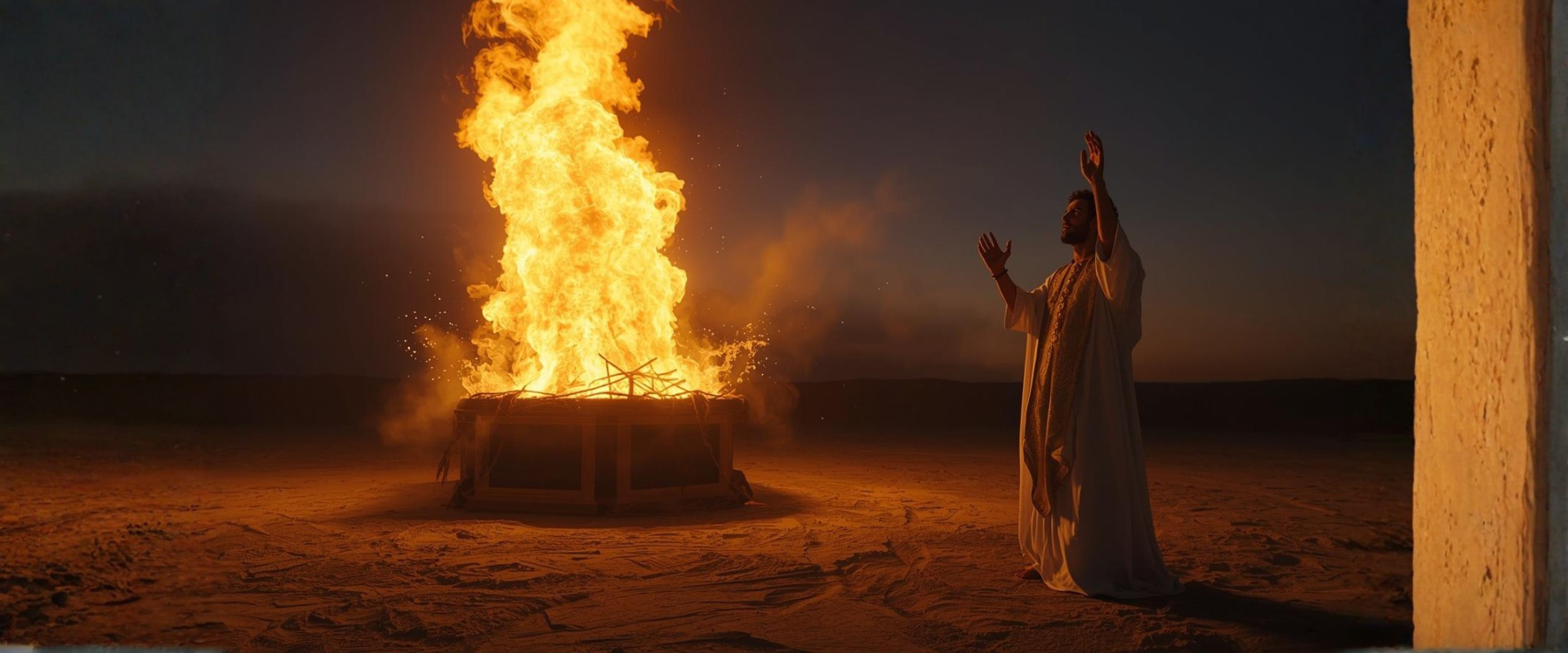
The parts of the temple conceal ancient wisdom about the structure of the cosmos. The altar in the center represents the sun, and the entire temple reflects divine order and physical harmony, what Newton called 'the divine plan.'.
This concept also applies to the structure of the Tabernacle and its vessels, which were built according to the instructions of the "divine plan,' 'as He showed you on the mountain" (Exodus 27:8), a divine instruction to Moses to build the Tabernacle and its vessels exactly according to the pattern presented to him on Mount Sinai.
The Haftarah for the portion of Hakhel deals with the construction of the Temple vessels in parallel to the construction of the Tabernacle in the portion. It describes in detail the construction of the Temple pillars, until 'and they finished the work of the pillars' (I Kings 7:22). These are the pillars "Yakin," the right pillar, and 'Boaz,' the left pillar. The pillars 'Yakin' and 'Boaz' are the 'foundation pillars' of the Temple and of the existence of the Jewish people.
And if we are wise,
All The people,
To establish (from the word "prepare") unity,
"The Lord will give strength (from the word bo-az) to His people,
May God bless His people.
Peace be with you.".
(Psalms 29:11)