The story of Jethro

Words for Shabbat - A community blog for this week's parashah

The story of Jethro

What kind of leaders would we like to have today??
 
By Dr. Amir Shaft
 

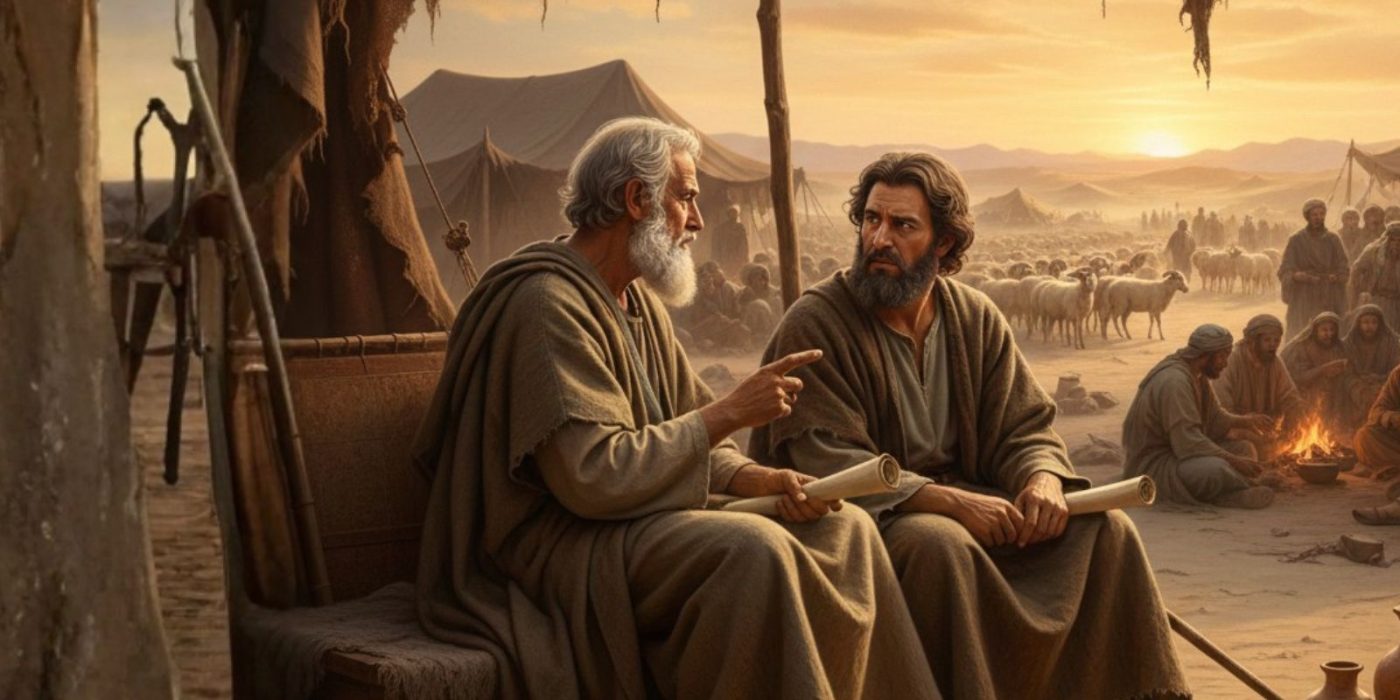
The parashah of Yitro has two main parts. In the first part, Yitro comes to visit Moses, together with Zipporah and their two sons, Gershom and Eliezer. He is received with honor by Aaron and the elders of Israel, and watches Moses sitting and judging the people from morning until evening. Yitro's advice to Moses is to appoint judges – "officials over thousands, officials over hundreds, officials over fifties, and officials over tens" (Exodus 18:21) – who would handle day-to-day matters and allow Moses to focus on the main issues.


The second part of the parashah describes the events at Mount Sinai: the people are commanded to sanctify themselves, wash their clothes, and not touch the mountain, and Moses ascends the mountain and receives the Ten Commandments. Additional instructions are then given regarding the prohibition of idolatry, the construction of altars, and modesty in the work of the priests.


Yeshayahu Leibowitz wrote that "the central theme of the Yitro portion is Mount Sinai, the giving of the Torah, and the Ten Commandments... and it is doubtful whether anything new can be said on the subject of the revelation of the Divine Presence, the giving of the Torah, and the Ten Commandments.".


Therefore, I have chosen to focus specifically on the first part of the parashah: Jethro's advice to Moses, and the question of leadership and judgment.


Before continuing, please take a pen and paper and write down the qualities you consider important in a leader or judge..


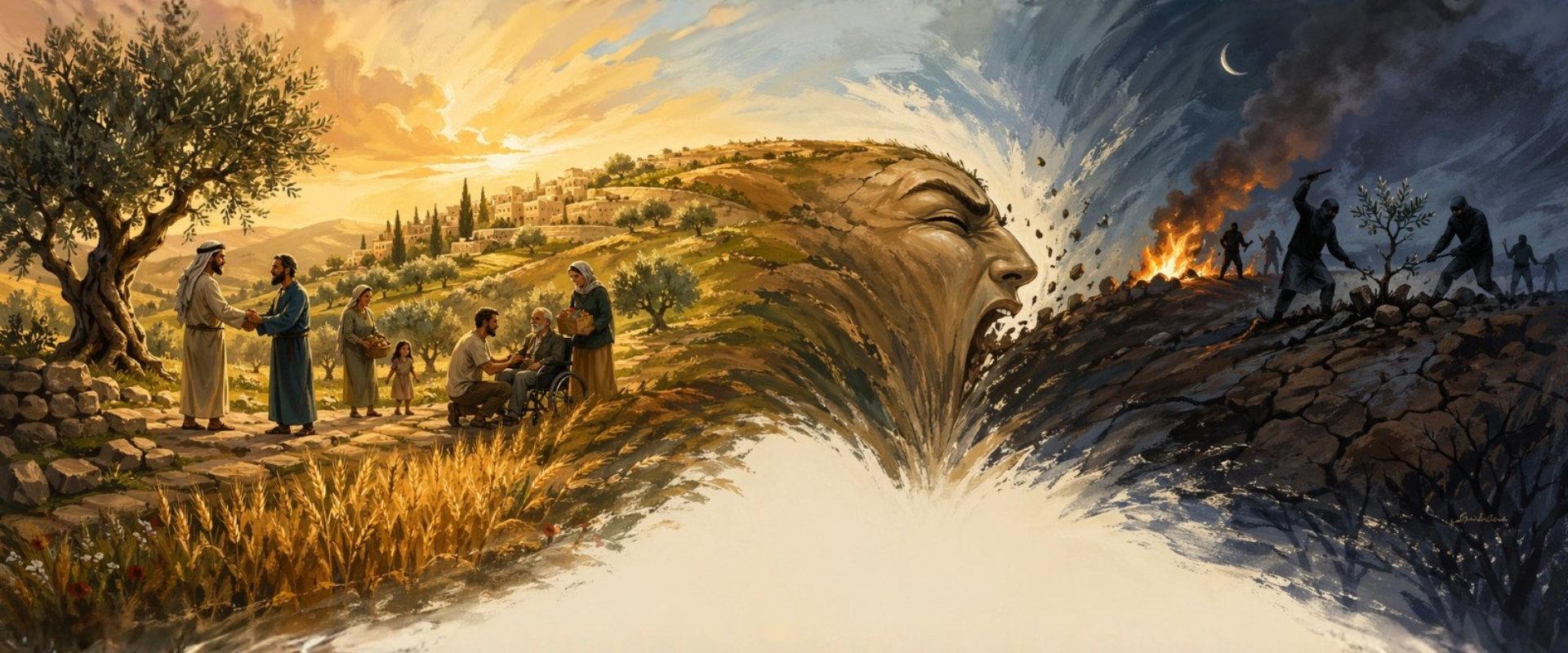
Jethro suggests that Moses choose "men of valor, men who fear God, men of truth, men who hate covetousness." The leaders who are chosen are not prophets who speak the word of God, but human beings who act based on human qualities and natural limitations. The Sages understood that the Torah "is not in heaven," and that it must be translated into practical life through human leadership, and therefore emphasized the moral and intellectual qualities required of judges.


It is easy to understand the meaning of "men of truth" and "haters of greed." Fear of God is a belief already described in the story of Abraham in the parashah Vayera. But what does "men of valor" mean? The Midrash explains that these are active people, people of action, not idlers. Similar to the "woman of valor" in Proverbs 31 – a figure who acts, leads, and cares for her home and community. Thus, it becomes clear that the Torah, which was given from heaven, needs to be realized through human intervention on earth and proper leadership.


A generation later, in the Book of Deuteronomy, Moses returns to describe the appointment of judges, but lists different qualities:
"Wise, understanding, and knowledgeable men from your tribes" (Deuteronomy 1:12–13).


Three additional characteristics are added here: wisdom, intelligence, and familiarity with the community—those who are known and recognized by it, and therefore influential.


The addition of these three characteristics in the Book of Deuteronomy joins those of Jethro, and in the Midrash they are combined into a single list of qualities required of the leaders of the people.


Thus, Chazakuni (Rabbi Chazakiah ben Manoach, 13th century) lists seven qualities for a judge: wise and knowledgeable, men of valor, God-fearing, men of truth, and haters of greed.


Why do they not all appear together in Moses' words?
Perhaps this is to teach us that there is no single model of leadership, or perhaps because it is very difficult to find leaders who possess all of these qualities together. It is said that if all seven qualities cannot be found, four or three will suffice, but one quality cannot be waived: men of valor.


Rabbi Bachai (Rabbi Bachai ben Joseph ibn Pakuda, 11th century) adds an important layer: the righteous and prophets in the Torah are not described in terms of wisdom or knowledge, but in terms of character traits. Noah is "a righteous man, blameless," Abraham "was blameless," and Moses "was very humble." It is not knowledge that is essential, but integrity of character and way of life.


Here, a central insight of the parashah becomes clear: the Torah does not seek perfect leadership, but rather worthy human leadership. Not charisma or genius, but responsibility, humility, and good character. Thus, even before the giving of the Torah, the parashah of Yitro presents a sober model of leadership—one that knows how to operate in a complex world, with compromises, limitations, and daily decisions.


This raises a question for us, as individuals and as a community, here and now:
How many of the qualities you chose overlap with the seven qualities listed in the Torah? And how many of the qualities you wrote down do you recognize in our leaders today?
Picture of אמיר שפט

Amir Shaft

Amir Shaft is the father of two teenagers, lives in western Ireland, is a professor of physiology, a cyclist, a Jewish believer, and a people person.

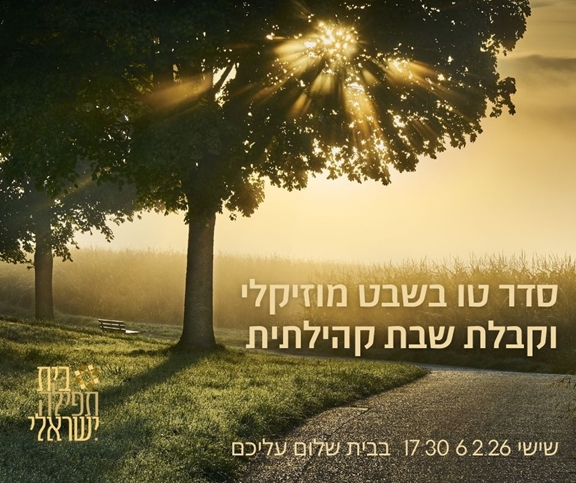
Musical Tu Bishvat celebration and community Shabbat reception

Musical Tu Bishvat celebration and community Shabbat reception

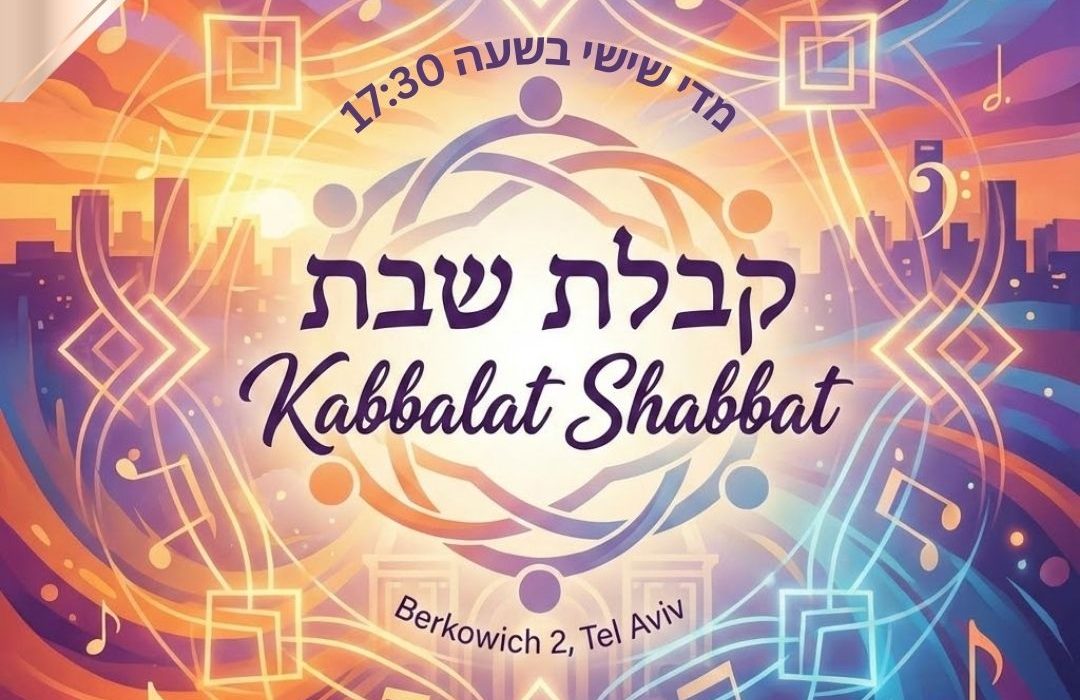
Shabbat Tu Bishvat at the Israeli House of Prayer


 Tu Bishvat at the Israeli House of Prayer🌿

Friday, February 6, 2026, at 5:30 p.m.
 
Tu Bishvat, the New Year for Trees, invites us to pause for a moment.,  Observe what is growing beneath the surface,  And celebrate the process—even if you can't see the fruits yet.
In a time that requires patience and forbearance,  Tu Bishvat encourages us to pause, marvel, and pay attention to what is already beginning to move..
 
Let's meet on Friday, February 6, 2026, at 5:30 p.m.,
 
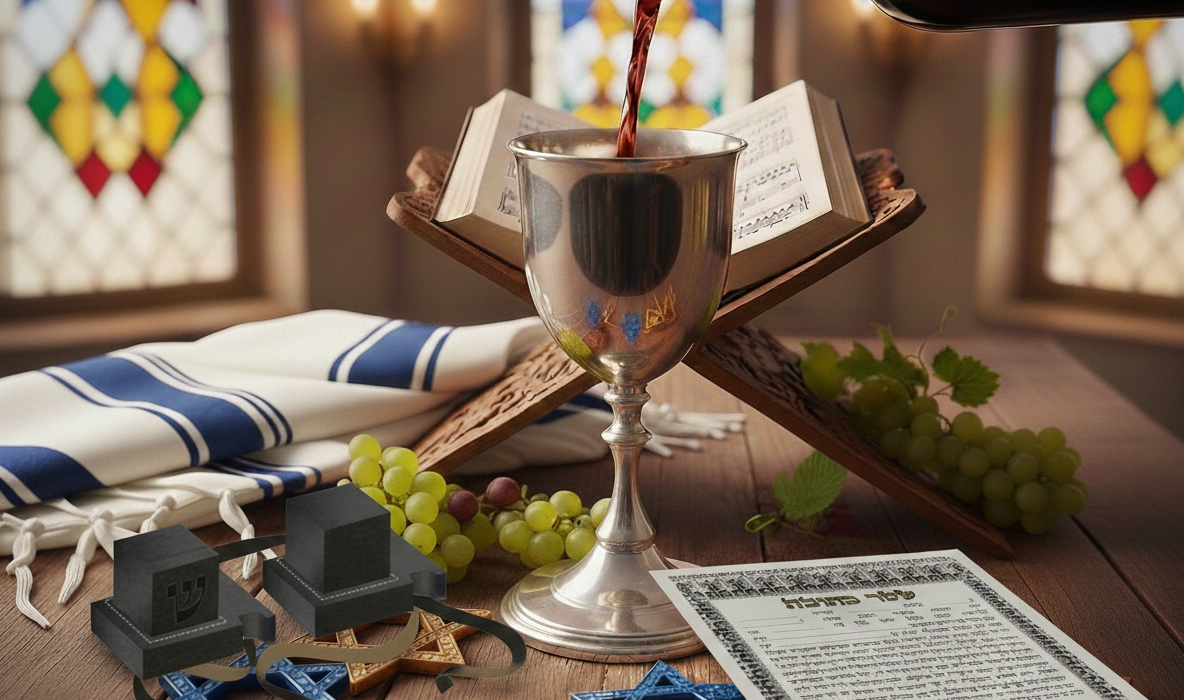
For a combined Shabbat and Tu Bishvat celebration with wine, challah, and a variety of fruits.
We will welcome the Sabbath.,  We will sing songs about nature and growth.,
 
Let us read and recount the praises of the fruits and the earth.,
 
Let us pray for potential and fulfillment.
 
And we will bless the good land.
 
When: Friday, February 6, 2026 | 5:30 p.m.

 
Where: Beit Shalom Aleichem, 2 Bar-Kovitz Street, Tel Aviv.

Parashat Beshalach

Words for Shabbat - A community blog for this week's parashah

Parashat Beshalach

Song of the Sea on the Path to Inner Development 

By Talia Birkan
 

The parasha Beshalach, known as Shabbat Shira, places the Song of the Sea at the heart of the story of the Exodus from Egypt. The parasha tells of the beginning of the Israelites' wanderings in the desert and of several miracles that occurred along the way under Moses' leadership: God brings down bread from heaven to feed the hungry people and gives them quail in the evening. Moses throws a piece of wood into the bitter waters and they become sweet. Moses strikes a rock and water, drinking water, comes out of it. Moses stands with his staff and his hands raised, and Israel defeats Amalek. And finally, the event of the splitting of the Red Sea, during which the Israelites crossed the sea and the Egyptians drowned. The people and Moses give thanks and praise to God for the obvious and supernatural miracle, inSong of the Sea, marking the end of slavery and the beginning of freedom.

The song does not end at a clear point. The Israelites are no longer slaves, but they are not yet a free people. Egypt is behind them, the Promised Land is still far away, and the desert stretches out before them. This is a moment between the old that is no longer and the new that has not yet taken shape. In this space, between a familiar past and an unknown future, song bursts forth.

The Torah describes that God does not lead the people by the short route. ..." And God did not lead them by the way of the land of the Philistines, for it was near; but God said, "Lestthe people might change their minds when they see war and return to Egypt. (Exodus 13:17). Rashi explains that returning to Egypt is dangerous; a people that has just been freed from slavery may be broken by an early encounter with war and ask to return. Freedom, then, is not just an external change of circumstances, but a process of conscious maturation. Sometimes the long road is the only road that leads to a future.

The moment before the sea is split is a moment of chaos: the sea ahead, Egypt behind, and the desert closing in on all sides. There is nowhere to run and no clear way forward. Maimonides describes the “chaos” as a state of desolation with no foothold, a state that arouses bewilderment and loss of direction. It is a moment when no solution is in sight and there is still no language for hope. Within this lack of foothold, the passage opens up—the sea splits, and the possibility of moving forward is revealed.

According to the Midrash, the Israelites were afraid to enter the sea, and only Nachshon ben Amminadav jumped in, and then the sea split. Therefore, there is a lesson here about faith. Faith and action precede miracles.

But physical transition alone does not bring redemption. For movement to become real change, another step is required, and this is where the Song of the Sea comes in. The Song of the Sea is not merely a description of what happened, nor is it merely an emotional response to a miracle. It is a human action taken within a reality that is still unstable. It is an attempt to put into words what is still in the process of becoming.

In this sense, the Song of the Sea is an opportunity for human learning about the experience of trust. It does not promise a solution, nor does it eliminate fear, but it allows us to keep moving even when reality is still blocked. Such learning is not foreign to us. Looking back on the months during which the nation struggled to bring back the kidnapped, we can see how the very ability to imagine their pain and suffering as if they were our own allowed us to hold on to hope for their return and for life – even before there was a clear reality to hold on to. As in the Song of the Sea, the experience of striving to bring back the captives was not proof of their return, but rather expressed the opportunity to accept the unknown and thus enabled us to extol the goodness, strength, and faith of the families and of all of us – until the last captive was returned!

The Holy Zohar sees the recitation of the Song of the Sea not only as a remembrance of a past miracle, but as a constant renewal of the Exodus from Egypt. Rabbi Shimshon of Ostropol writes that the song “illuminates” redemption through human speech. According to this view, speech is not merely a description of reality, but a tool that enables reality to unfold. It is no coincidence that the Sages stated: "In every generation, a person must see himself as if he had come out of Egypt.  This is not just a call to remember, but an invitation to empathize—to imagine ourselves in transition, in uncertainty, and to ask what freedom looks like when it is still a work in progress.

Mary Oliver talks about leaving in order to be free, saying that what is frightening is not the freedom we will gain, but the responsibility that comes with it, namely, being true to ourselves in choosing freedom.

The moral questions raised by the song also fit into this narrative. “The horse and its rider are cast into the sea” – what are we singing about? Tradition cautions against schadenfreude and emphasizes that we should not rejoice in human suffering. Perhaps the song does not celebrate the defeat of the Egyptians, but rather marks the end of the consciousness of slavery. Victory does not lie in destroying the enemy, but in the ability to stop seeing ourselves as doomed to remain where we are.

And amid the singing, Miriam the prophetess appears, and the women come out with drums and dancing. It is a voice of thanksgiving and of life. A voice that expresses redemption as a powerful decision, as the opening of a new path—a path that includes community, movement, and hope.

One of the central verses in the Song of the Sea is: "This is Eli and Anahu. A verse that conveys a dual meaning: recognition of God's greatness, alongside a desire for closeness. “And we will adorn Him” – from the word "noah," meaning home, and also from the word "noah," meaning beauty and adornment. Not only to believe in a distant God, but to build a place for Him within life itself, within the fragile and evolving human reality.

The Song of the Sea concludes with these words: ""The Lord shall reign forever and ever" – This is not a statement about a world that has already been redeemed, but rather a continuing hope: a request that trust, intention, and movement continue to operate even after the song ends, even when there is still a long way to go.

The Song of the Sea, then, is not only a memory of a miracle that occurred in the past, but a path to inner development, to learning to hold on to a foundation of trust that allows movement even when reality has not yet been resolved. It is the ability to imagine, to believe, and to continue walking in a space that still seeks redemption.

Picture of טליה בירקאן

Talia Birkan

Talia Birkan is a woman of spirit and education in the realms of thought and action. She writes books and provides guidance in holistic development.

Parashat Bo

Words for Shabbat - A community blog for this week's parashah

Parashat Bo

It's time to wake up – taking responsibility for time as the foundation of hope

 
By Ronen Koehler
 

At the heart of the parashah stands one commandment, seemingly quiet but revolutionary: "This month shall be unto you the beginning of months.".

This is the first commandment given to the Jewish people as a nation. Not the exodus from Egypt, not a social law, not a moral imperative, but taking responsibility for time. This is not a random choice. It touches on the heart of the concept of freedom, and therefore also on the heart of the meaning of hope.

The Sages interpreted the words "This month shall be unto you" not merely as a technical commandment, but as a transfer of authority. Not "I define the time for you," but "you shall determine it." This is a profound and bold move: time passes from the hands of Heaven to the responsibility of man. From this arises a whole system of human responsibility: sanctifying the month, determining the calendar, passing on knowledge of the months to distant communities, constructing a calendar that takes pilgrims into account. It is a method that invites controversy, uncertainty, and arguments about authority, but insists on human freedom and choice. An early form of liberal thought.

There was an alternative, a solar calendar in which everything was predetermined. Orderly, predictable, and convenient, with almost no room for human decision-making. A calendar in which history "moves forward on its own." But the choice was not for convenience, but for a lunar calendar, human, dependent on testimony and decision-making. Less elegant and established, but requiring humans to take responsibility. This is the source of the deep connection between time and freedom: slavery is a situation in which time is predetermined for you; freedom is a situation in which you can, and above all are required to, choose and decide, even at the cost of imperfection.

In Egypt, the Israelites were slaves not only to Pharaoh, but also to time. They did not determine when the day began, when the week ended, or when reality changed. Time was the property of the ruling class. Therefore, just before leaving Egypt, they were told: if you want to be free, start by saying when the month begins. Start by saying: now.

The same position was powerfully articulated by the prophet of human freedom, the black pastor Martin Luther King, in his "I Have a Dream" speech. He repeated the call again and again: "Now is the time." He warned against moral procrastination, against the argument that "it is right, but not now." Time, he said, does not heal injustices. It is neutral. Only human action gives it moral direction.

In the parashah "Bo," the Israelites are commanded to sanctify the month while they are still in darkness. The plague of darkness is still here, Pharaoh has not yet truly released them, and the future is unclear. Nevertheless, they are required to begin to conduct themselves as a free people within the reality of slavery. Not to wait for "after," but to begin now.

In the Beit Midrash, whose theme this year is Shabbat, we discussed how the calendar itself is a human construct. There is no such thing as a "week" in nature, nor is there a "new moon." And that is precisely why it has power: humans draw a framework within time, and within it they choose meaning, commitment, and action. Without a framework, everything is postponed, smeared, and dissolved.

As the poet Yankele Rotblit said, "Don't say 'the day will come'—bring the day.".

So even today, faced with a sense of civil disintegration, it is easy to fall into a new kind of slavery: slavery to procrastination. "It's not the right time," "Let's wait," "Soon." But in the parashah "Ba," the Sages, Martin Luther King, all teach: "There are moments when waiting itself is an injustice.".

And the civil significance is clear:
The upcoming elections are not an abstract idea or a distant prospect. These are the most important elections in the history of the State of Israel. The time between now and election day is the most important civic resource we have.

And just as we knew to shout "Everyone—now!" because we knew that in human life, time means life, so too in elections there is a "now."

Now is the time to affiliate,
Now is the time to make an impact from within.,
Now is the time to talk to those who are still undecided.,
Now is the time to choose engagement over cynicism, action over despair.

Time is not neutral. It will not "do its thing." When we do nothing, it works in favor of those who already hold power. When we act, it can become a tool for change. As the members of Hadag Nahash say, it's time to wake up. Democracy doesn't disappear in a day, and it won't be saved in a day either. It depends on what we choose to do with the time we have.

Now!

Picture of רונן קלר

Ronen Koehler

Ronen Keller is an organizational consultant, social activist, one of the leaders of "Brothers in Arms," and chairman of an Israeli activist center.

The Parashah of Vaera

Words for Shabbat - A community blog for this week's parashah

The Parashah of Vaera

Hope dies last

 
By Dr. Esti Doron


The parashah Vaera is the second parashah in the Book of Exodus, the parashah in which Moses and Aaron begin negotiations with Pharaoh for the release of the Israelites from Egypt. The parashah opens with God's revelation to Moses and an explicit repetition of the promise God made to the patriarchs to give the Israelites the land of Canaan to dwell in. God also tells Moses that He hears the suffering and hardship of the Israelites and will therefore save them and bring them out of Egypt. This is a promise of redemption. In fact, this is the second time that God has appeared to Moses, appointing him as the leader who will redeem the people and making the same promise to him. The first time was at the burning bush. Why was a second time necessary? Because Moses' mission failed the first time. The first time Moses and Aaron went to Pharaoh to ask him to release the people so they could sacrifice to God in the desert, Pharaoh refused and increased his burden on the people. And since the first time failed, it was necessary to repeat the same promise and the same appointment. I learn from this that we must persevere in our tasks and not despair if we do not succeed immediately.. Consistency and perseverance lead to success. But the big surprise comes when Moses and Aaron arrive with the news of redemption for the people. The text tells us that the people did not listen to Moses" words "because of their impatience and hard labor." They were so busy with their daily lives, with their current hardships, that they became indifferent to Moses' words because they had lost hope.


When I think of hope, the phrase "Hope dies last" comes to mind, which is an expression that originates from a quote by Nadav Goldstein He was murdered on October 7 in Kfar Aza along with his daughter Yam, and became a symbol of resilience and hope. His three children were kidnapped to Gaza, and when they were released from captivity after 51 days, his daughter Agam posted the sentence, "Hope dies last, right, Dad?" This sentence became a mantra for the family and the community, calling on them to rebuild their lives and their kibbutz after the attack; a mantra calling on them not to give up hope.


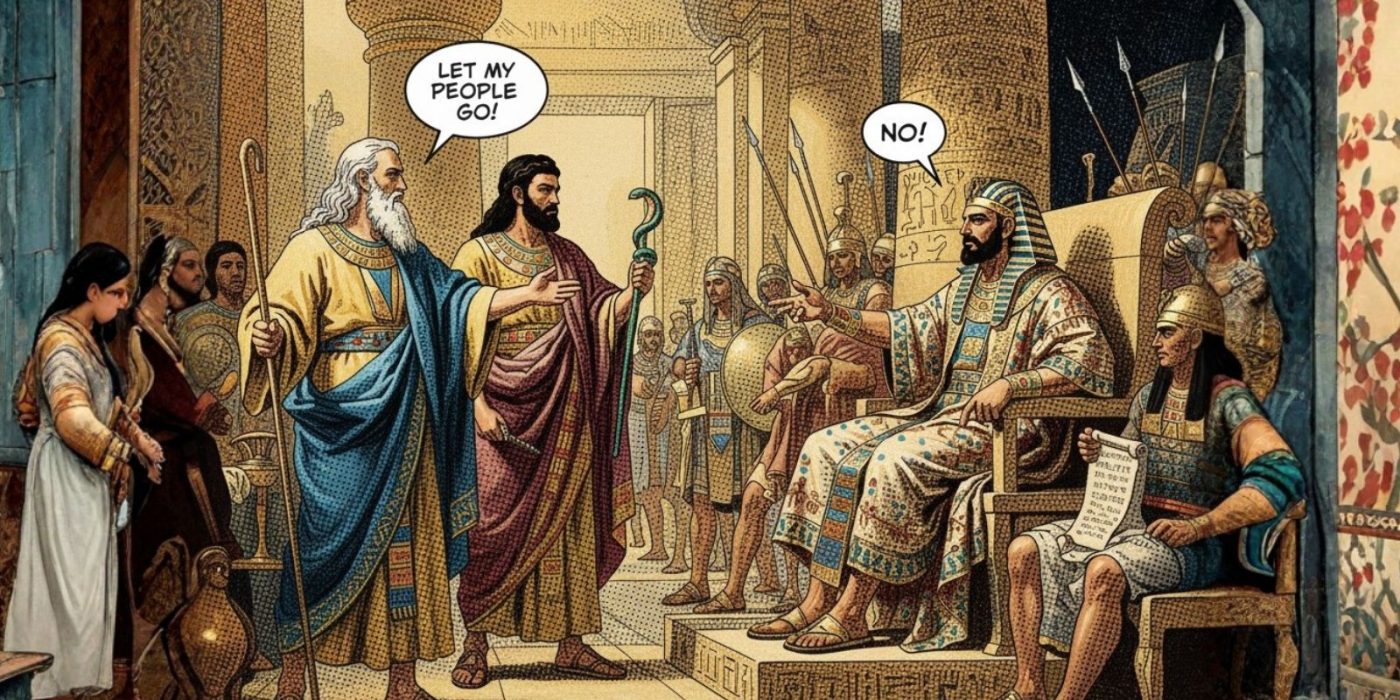
Later in the story, Moses and Aaron go to Pharaoh and ask again to let the people go to the desert for three days to sacrifice. Pharaoh refuses, and then the plagues begin. The parashah Vaera includes seven plagues: blood, frogs, lice, wild animals, pestilence, boils, and locusts, with Aaron actually performing the first two plagues of blood and frogs. And the Lord said to Moses Say to Aaron Take your staff and stretch out your hand over the waters of Egypt, over their rivers, over their streams, over their ponds, and over all their reservoirs of water, and there shall be blood.and there shall be blood throughout all the land of Egypt, upon the wood and upon the stone. And Moses and Aaron did so, as the Lord commanded, and he lifted up the rod and struck the water that was in the river, in the sight of Pharaoh and in the sight of his servants. his servants..."

(Exodus, 7:19-20)


The fact that Aaron, and not Moses, is the one who performs these plagues is related to "gratitude." According to commentators, Moses was saved as a child thanks to the Nile, and it is not fitting that Moses should strike it and turn it into blood. On the surface, it seems natural to recognize kindness, but in our daily lives we repeatedly struggle to see the good, to acknowledge invisible people and thank them, and we take kindness for granted. In my opinion, this is a lesson that is no less profound than the hope for a better future: even in the midst of a difficult struggle, and even when there is still no liberation in sight, there are things that we must not lose along the way. Recognizing the good is not a luxury of good days, but a foundation that sustains the spirit, especially in times of impatience and hard work.


Gratitude is perhaps one of the simplest and most profound acts that enable us to break out of apathy and not close our hearts to life's difficulties. In recent years, I have been trying very hard to increase my awareness of gratitude and appreciation. Not to take everything I have for granted, but to pause for a moment and recognize the good in it. One of the moments I really love about welcoming Shabbat at the Israeli House of Prayer is saying thanks for something that happened during the past week. I remember during the coronavirus pandemic, when I was having a really hard time with the lockdowns and the fear, I would go out for a walk and make a mental list of all the good things I have. I would give thanks for my legs, which I stand and walk on, thanks for the air I breathe, thanks for the sun that came out in my honor during my walk. Even in the last two years, which have been very difficult, I try to continue this practice and increase my gratitude; I try at least once a day to stop and give thanks for everything I have. Not because everything is good, but so as not to lose the ability to hear promise, even in times of impatience and hard work, even when redemption is still far away. Perhaps in this way, with small steps of gratitude, it is possible to keep hope alive. I recommend adopting this habit as a way of life.


Shabbat Shalom!

Picture of ד"ר אסתי דורון

Dr. Esti Doron

Esti Doron is a Doctor of Education and is involved in teacher training, evaluating educational projects, and fostering educational leadership. She is married, a mother of 3, and a loving grandmother to a grandson.

Shemot Weekly Portion
Words for Shabbat - A community blog for this week's parashah

Shemot Weekly Portion
All in all, I'm just God

 
By Rabbi Esteban Gottfried
 

Shemot. The Book of Shemot (Exodus). A new story begins here. The Book of Exodus is completely different from the Book of Genesis. Until now, we have heard the stories of the patriarchs, read about personalities, families, and individuals. They were the heart of the story. In Genesis, God was the God of the family—present in person, speaking in dreams, but sometimes perceived as acting according to a grand and mysterious plan beyond our comprehension.


Here, already in the first verse, the focus shifts. We are talking about "the children of Israel," about a group. The transition is gradual but rapid, and the group becomes a collective: "And the children of Israel were fruitful and multiplied, and waxed exceeding mighty." The king of Egypt gives a name to this metamorphosis: he calls it "a people." This is the first time that Israel is referred to as a people.

 

"Behold, the people of Israel are numerous and powerful. Let us deal wisely with them, lest they multiply." (ibid., 10).


This is the first time Israel is referred to as a nation. From this point on, we no longer speak of a family, but of a nation. "The people of Israel" – contrary to the opening statement of the Declaration of Independence, we did not become a nation in the Land of Israel, but rather in exile. In our first exile: the Egyptian exile, which is also the only exile in the history of the Jewish people that took place entirely in one place – in the land of Goshen.
 

And Rabbi Abraham of Sochaczew says that it was good that it was so:

"In all the exiles, the Israelites were scattered in different places, only in the Egyptian exile were they all in one place, because all the exiles came after the giving of the Torah, and the Torah unites and brings together the Israelites despite their dispersion, but the Egyptian exile was before the giving of the Torah, and if they had been scattered in different places, they would not have been able to survive, God forbid."


But that is not the only difference. Not only does the human character change, but so does the character of God. In Exodus, we encounter a new kind of God: a God who hears, remembers, sees, and knows. This is a God who cares.


"""And God heard their groaning, and God remembered His covenant with Abraham, Isaac, and Jacob. And God saw the children of Israel, and God knew them.שDeath, 25-23)


The idea that it is possible to influence God, to motivate Him to act through human cries, is not self-evident. It is an idea that contradicts the image of a distant God who has a plan that we cannot understand. The parashah tells us that God is "human" in the deepest sense—He has feelings and the potential to empathize with our suffering. The God of Exodus is indeed powerful in His appearances—fire, cloud, and special effects—but He is also a God who "cares.", And it can be moved. And here arises the poignant question posed by Moses: If God cares so much and is capable of acting, why was the suffering necessary?


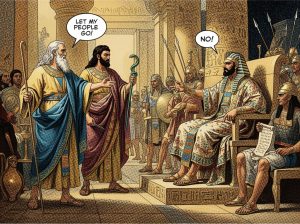
This is also the question Moses asks God at the burning bush, when he asks Him what His name is. He did not ask, "What is your first name?" or "How should I address you?" but rather, "What kind of God are you? Where have you been all this time?"


Rabbi Jacob Leiner, (the second Rebbe in the dynasty of the Izhbitz-Radzin Hasidic Rebbes) in his book House of Jacob, writes exactly that: Moses asks, "When I come to the Israelites to tell them that you are finally coming to redeem them, they will ask me: Where was God yesterday when the Egyptians filled their quota of bricks with my children? Where was God when they threw my son into the Nile the day before yesterday? How can they turn to you, and what will you answer when they ask where you have been until now?


And the well-known answer is not unequivocal. It is perhaps the most enigmatic answer in the Torah:


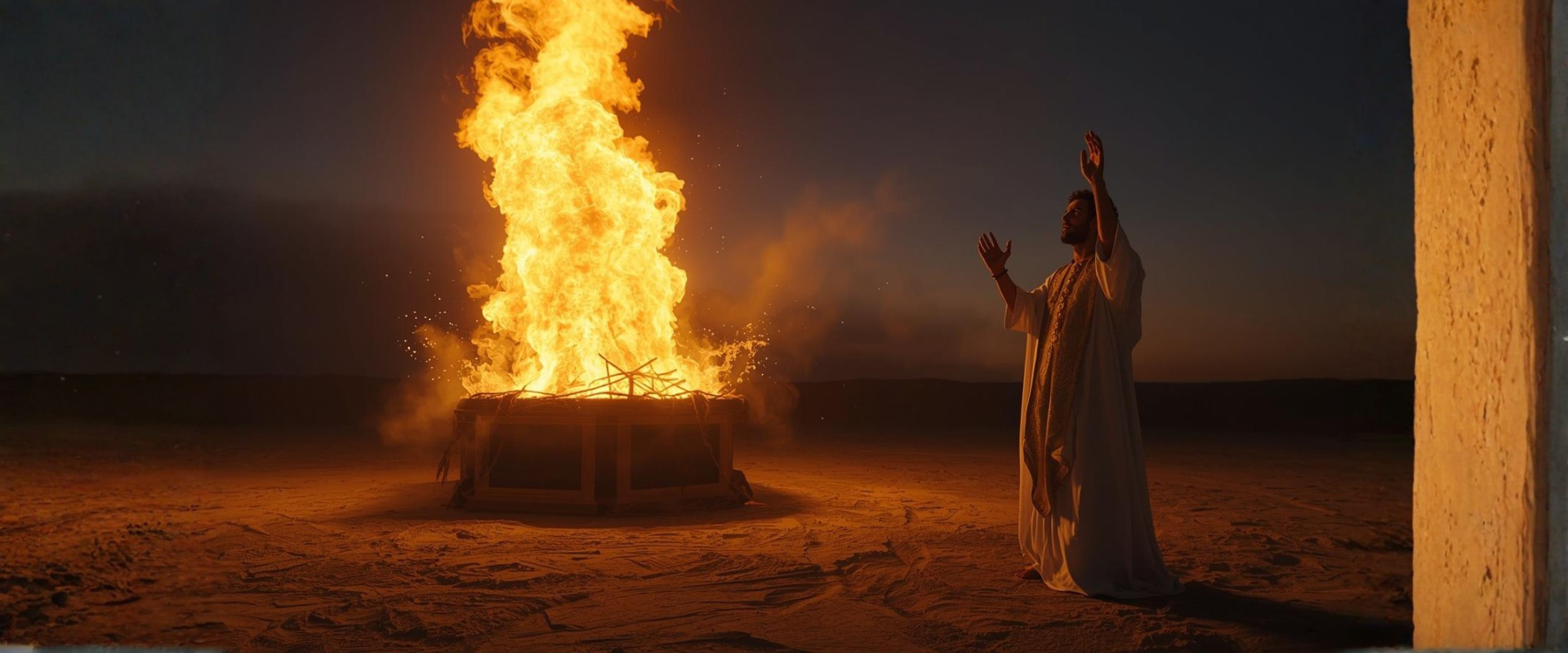
"And God said to Moses, "I will be what I will be; And he said, Thus shalt thou say unto the children of Israel, I will be hath sent me unto you." (Exodus 3:14).


The enigmatic answer "I will be what I will be" as God's self-designation has given rise to countless interpretations. I would like to offer two interpretations that speak to my heart:

  1. I will be whatever I will be – I can be anything, because I am everywhere and at all times, and there is no way to define me in existing terms, no way to pigeonhole me, because I am existence itself, constantly changing. My name is not a name but a verb, indicating constant change, elasticity, and elusiveness.


  1. There are actually not one but two answers here: "I will be what I will be"; And "Thus shall you say to the children of Israel: I will be Send me to you." – The first name, "I will be what I will be," is my true name. That is, I will do what I can, but I cannot promise anything. It is very important to me, it is in my soul, I have promised, I have heard the cry, and I know that this is what must be done, but I cannot promise... I will be what I will be... I will try very hard... 

Of course, this is not enough for Moses. He knows that if he comes to the Israelites with such an ambiguous message, he has no chance of success; therefore, God corrects himself. Actually, he does not exactly correct himself, but rather tells Moses that he should present him to the Israelites not as "I will be what I will be" but as "I will be" – he will be there, come what may. Always present, always on guard... always with you... even though his real name is "I will be what I will be" – that is the divine reality. In fact, one could say that God and Moses are "working" on the Israelites. They know the truth, but it is a secret between them, because the people need hope, they need to believe that the Holy One will be there; and ultimately, both God and Moses understand that belief in the success of the mission of redemption is essential to its success, and that without it, they will not receive cooperation from the equally important factor – the people – who have just been created as such. He knows that "I will be what I will be" has no meaning without belief in "I will be." Therefore, it is not really a lie, but a kind of white lie.


The God reflected in this interpretation is a God with whom one can identify, a God who really wants to help but cannot always do so. This is a very human God. Such an image makes me want to resemble him in the human qualities that I myself attribute to him: he is friendly, accessible, caring, very emotional, and has the best of intentions.


Perhaps we can offer another interpretation of God's twofold answer to Moses's profound question. It may be that there is not one true answer for Moses and another, less difficult answer for the people; perhaps the true answer lies in a combination of the two answers. "I am," says God, "both "I will be what I will be" and "I will be."" "I will be what I will be" is the answer to the intellect, to the mind, the only possible answer when we try to confront our God with the imperfect reality in which we live. This is the complex philosophical answer. "I will be" is the answer to the heart, to emotion. The God of "I will be" offers us comfort and hope. There is no slip of the tongue or correction here. There are two elements here that are essential to human beings. There is an essential paradox here.


In difficult times such as these, we may need the God of "I will be" more than ever, but we recognize and understand, and cannot help but know that reality is complex, and all we can receive from God is "I will be what I will be": "I promise nothing... I will try very hard... What can I do? All in all, I am just God..."


Picture of הרב אסטבן גוטפריד

Rabbi Esteban Gottfried

Co-founder of Beit Tefila Israeli, community rabbi, and director of the organization since its inception. Married with two children, a Tel Avivian at heart.

Exodus

Words for Shabbat - A community blog for this week's parashah

Book of Exodus

Words for Shabbat

""Turn it over and turn it over, be absorbed in it" is what is said about the Torah: Study the Torah from all sides, because each time a different and new aspect and interpretation of the Torah can be revealed. This year we are renewing ourselves with a new section in the newsletter: "Words for Shabbat" - each week we will publish in the newsletter and on the Beit Tefilla website a Torah passage - a few words about the week's parashat from one of the community members and Beit Tefilla staff. And just as their faces are different, so are their opinions - we will wait to read the personal interpretation and learn what the encounter with the parashat brings up in them.

Parashat Vayechi

Words for Shabbat - A community blog for this week's parashah

Parashat Vayechi

On forgiveness and healing

 
By Rabbi Rivy Dror
 

We are in the last section of Genesis, at the end of the cycle of stories about Joseph. Last week, Joseph revealed to his brothers that he was their long-lost brother. Their reaction was shock and fear. Joseph tried to calm them down and explain: "And now, do not be sad, and do not be angry with yourselves for selling me here, because God sent me before you to preserve life." (Genesis 45:5) Joseph placed his entire story of being sold by his brothers within a clear framework: he had arrived in Egypt by God's providence, in order to save his family from famine and enable them to survive. The brothers, on the other hand, who until a moment ago saw Joseph as a threatening and abusive Egyptian ruler, suddenly discovered that he was their brother. The same man with absolute power, the one who played with them, imprisoned them, threatened and frightened them, was the brother they had hurt. And if so, what they had experienced until now was revenge (even if out of great and justified anger towards them). Had Joseph taken sufficient revenge? Had Joseph forgiven them? It was a moment of upheaval – unclear, frightening, but also potentially reassuring, because perhaps now their trials would come to an end.


Joseph's invitation to the entire family to come down to Egypt seems like a sign of reconciliation. The issues have been resolved, and the past is behind them. Joseph provides for his brothers, cares for them, and gives them a place to live and security. And the highlight: finally, the father and his beloved son, Jacob and Joseph, can be together. It seems that the story has come to a peaceful conclusion, that the family has been reunited and that it is possible to move on.


But then, in our parashah, Jacob is gathered to his fathers, and it seems that fear returns: And Joseph's brothers saw that their father was dead, and they said, "Joseph will surely hate us and repay us for all the evil we did to him."evil we did to him." The brothers fear that Joseph will continue to hold a grudge against them and do them harm. If so, what has actually happened all these years? Have the relations between the brothers not stabilized and solidified? Is the story not yet over? Why do they feel that Joseph has not yet forgiven them?


Nachmanides says that Jacob never knew that his sons had sold Joseph; they were afraid to tell him for fear that he would curse them, and they continued to maintain the lie all those years. Joseph himself did not tell Jacob, because he did not want to bring a curse upon the family and perhaps because he did not want to speak ill of them again, as he had done in his youth. So as long as Jacob was alive, there was a framework that held the family together and enabled forgiveness. With Jacob's death, what had been left unsaid and unresolved resurfaced. Therefore, the brothers turned to Joseph with a request and a plea: “Please forgive your brothers" transgression and their sin" (50:17). For the first time, we hear the brothers asking for forgiveness in words. This appeal reveals how deeply the wound still lives within them, and how the forgiveness they have been given so far has not been complete and genuine for them.


And indeed, did Joseph forgive his brothers?


Joseph's response to his brothers" request for forgiveness echoes what he had already told them: "And Joseph said unto them, Fear not, for am I in the place of God? You intended to harm me, but God intended it for good, in order to bring about today's result, to preserve many people alive.' (Genesis 45:19-20) In other words, "everything comes from God'—the good, the bad, and the not-so-bad. He does not deny their evil intentions: he knows full well what they did to him. Nevertheless, Joseph chooses to put the story behind him by giving meaning to the bigger picture. Not by returning to the hurt and seeking personal forgiveness, but through the belief that everything was ordained from above and that the injustice done to him was part of the path that God had paved for him. The concept of everything being for the best is deeply rooted and familiar in Judaism: 'This too is for the best.“ Not as a denial of the pain, but as a suggestion for a different way of framing it. And apparently, for Joseph, this is the path to forgiveness and healing.


The brothers, on the other hand, are in a completely different place. The good that came out of the injury and the story of the sale does not satisfy them; they are troubled, what they did was indeed bad, and they bear guilt and shame. For them, saying that it was all God's doing does not necessarily alleviate their need to be sure that Joseph has forgiven them for their actions. Such a statement sounds like a deflection of human responsibility and an unwillingness to deal deeply with the process of forgiveness between them. Now that they no longer need to hide from Jacob, they cannot continue their lives without truly forgiving each other. Until that happens, the brothers fear Joseph. They want to take responsibility for their actions in order to free themselves from guilt, but they also need Joseph's deep forgiveness, which he may or may not be able to give them.


As a supporting anecdote, it is interesting to note that Joseph's initial response to his brothers" request was to cry. "And Joseph wept when they spoke to him.' (Genesis 50:17) It is true that Joseph is known as a crier, but perhaps his crying reflects his unprocessed feelings about what his brothers did to him, which only highlights how much work he still has to do in terms of forgiveness.


The parashah Vayechi invites us to consider that there is no single way to forgive and no single way to heal. Some people heal by explicitly asking forgiveness from the offender and acknowledging the pain caused; others heal by finding broader meaning and faith; some heal through time and distance; and some wounds remain open and become part of the story of life. The Torah does not decide which way is better. It presents a complex human picture and allows us to recognize that different people deal with pain and hurt in different ways.


I think that the fact that the Book of Genesis ends with the theme of forgiveness is no coincidence and is very relevant to our times. It is a message that speaks of forgiveness as a stepping stone to healing and prosperity. In order to break the cycle of hurt and violence, we must find the strength to forgive and confront the pain and difficulty, rather than moving on without addressing the depth of the hurt we have suffered and inflicted on others. The parashah Vayechi leaves us with a question that is both personal and public: How will we choose to heal our pain? Joseph was so hurt, and when he reached a position of power, he acted out of pain that turned into revenge. What will we choose: power and pain after the fact, or the power of forgiveness out of pain and healing? How can we hold on to our power without turning our wounds into justification for hurting others, even if they have hurt us?.


Perhaps healing does not begin with justification or judgment, but with the ability to distinguish between pain and revenge, between protection and abuse. This is not a suggestion to erase what has been done to us, but neither is it an agreement to shape us as a society solely through our wounds, but rather through the forgiveness we grant each other.


A peaceful Sabbath

Picture of הרבה ריבי דרור

Rabbi Rivi Dror

Rivi is a rabbi in the Israeli House of Prayer community, lives in Pardes Hanna, and is the mother of two daughters. .